An armature winding machine is specialized equipment used to wind copper wire onto motor armatures with high precision, consistency, and efficiency. This guide explains different types of armature winding machines, key selection factors, price considerations, and how manufacturers can choose the right winding solution for mass production.
In brushed DC motor manufacturing, the armature winding process is one of the most important steps influencing motor performance, reliability, and production efficiency. The quality of the winding directly affects electrical characteristics, torque output, and the overall service life of the finished motor.
As global motor manufacturers continue moving toward automated production, traditional manual winding processes are gradually being replaced by more advanced automation solutions. An armature winding machine helps manufacturers achieve stable winding quality, improve production efficiency, and reduce dependence on manual operations.
However, selecting the right winding equipment is not simply about choosing a machine with higher automation. Different manufacturers have different requirements depending on motor design, production volume, winding specifications, and future expansion plans.
For companies producing automotive motors, power tool motors, and other high-volume DC motors, understanding the differences between various winding solutions is essential before investing in automation equipment.
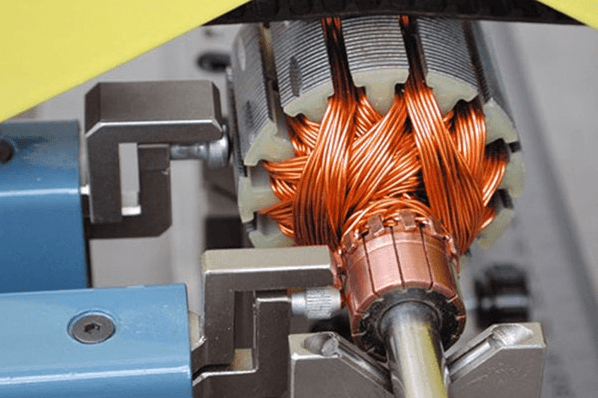
What Is an Armature Winding Machine?
An armature winding machine is a specialized motor manufacturing machine designed to wind insulated copper wire around the slots of an armature core according to a specific winding pattern.
During the winding process, the machine precisely controls key parameters such as wire tension, winding speed, wire positioning, and the number of turns. These parameters directly influence the consistency and electrical performance of the armature.
Compared with manual winding, automated armature winding equipment provides better repeatability and production stability. This is especially important for manufacturers producing large quantities of motors, where even small variations in winding quality can affect product performance and production yield.
Modern armature winding machines are widely used in brushed DC motor manufacturing, automotive motors, power tools, household appliances, and other applications where reliable and consistent winding quality is required.
Depending on production requirements, these machines can be configured with different automation levels, from semi automatic operation to fully automated production systems.
Types of Armature Winding Machines
Motor manufacturers usually select different winding solutions based on production volume, investment plans, and automation requirements. The main categories include manual, semi automatic, and fully automatic armature winding machine.
Semi-Automatic Armature Winding Machine
A semi automatic armature winding machine is commonly used by manufacturers that need improved production consistency while maintaining flexibility in operation.
In a semi automatic system, operators usually handle loading and unloading, while the machine automatically completes the winding process. Compared with manual production, this solution significantly improves winding accuracy and reduces variations caused by operator experience.
Semi automatic winding equipment is often suitable for medium-volume production, product development stages, or manufacturers producing multiple motor models that require production flexibility.
When evaluating a semi automatic armature winding machine price, manufacturers should consider not only the initial equipment investment but also improvements in efficiency, quality stability, and labor savings.
Fully Automatic Armature Winding Machine
A fully automatic armature winding machine is designed for manufacturers requiring higher production capacity, stable cycle time, and reduced manual involvement.
Compared with semi automatic solutions, fully automatic systems can integrate more processes, including automatic loading, armature positioning, winding, wire cutting, inspection, and production data monitoring.
For automotive motor suppliers and large-scale DC motor manufacturers, automation is becoming increasingly important because customers require higher product consistency and stricter quality control standards.
A fully automated winding solution helps manufacturers maintain stable production performance while supporting large-volume manufacturing requirements.
Key Factors to Consider When Choosing an Armature Winding Machine
Selecting an armature winding machine requires a comprehensive evaluation of the motor application, production requirements, and long-term manufacturing goals.
Motor Design and Winding Requirements
The first factor manufacturers should consider is the motor structure itself.
Different armature designs may require different winding technologies depending on parameters such as armature diameter, stack length, slot number, wire diameter, and winding method.
For example, a winding machine designed for small consumer motors may not meet the precision and stability requirements of automotive DC motors. Therefore, manufacturers should provide detailed motor specifications when discussing equipment solutions with suppliers.
A suitable machine configuration ensures stable winding performance and avoids production limitations after equipment installation.
Production Volume and Automation Requirements
Production capacity is another important consideration when selecting winding equipment.
For manufacturers with limited production volume or frequent product changes, semi automatic solutions may provide sufficient flexibility. However, companies supplying automotive customers or large motor manufacturers often require fully automated systems to achieve higher output and consistent quality.
The right automation level should match current production needs while also considering future capacity expansion.
Investing in automation is not only about increasing speed. It is also about improving process stability, reducing production risks, and creating a more reliable manufacturing system.
Machine Precision and Process Stability
The winding process requires accurate control of wire movement and tension.
A high-quality armature winding machine should maintain stable performance throughout continuous production, ensuring that every armature meets the required manufacturing standards.
Important capabilities include:
Stable wire tension control
Accurate winding positioning
Consistent production parameters
Reliable operation during long production cycles
These factors directly influence motor quality and production yield.
Supplier Experience and Technical Capability
Choosing experienced armature winding machine manufacturers is another critical factor.
Motor automation equipment is usually highly customized because different customers have different motor structures and production requirements. A capable supplier should understand both equipment technology and motor manufacturing processes.
Experienced suppliers can provide support in areas such as:
Process development
Equipment customization
Production line integration
Installation and commissioning
Technical service support
For manufacturers investing in automation equipment, supplier capability often determines the long-term success of the project.
Armature Winding Machine Price: What Determines the Investment?
The armature winding machine price varies significantly depending on equipment configuration, automation level, and production requirements.
Unlike standard industrial equipment, motor winding machines are often customized according to specific motor designs. Therefore, suppliers usually evaluate technical requirements before providing a quotation.
The main factors influencing equipment cost include automation level, production capacity, motor specifications, and additional functions.
A basic semi automatic machine usually requires a lower investment, while a fully automatic system with loading systems, inspection functions, and production line integration requires a higher budget.
Manufacturers should also consider the long-term value of the equipment, including labor savings, production efficiency improvement, quality consistency, and future scalability.
Choosing equipment only based on initial price may result in limitations when production requirements increase.
Why Motor Manufacturers Are Moving Toward Automated Winding Solutions
The global motor industry is experiencing continuous changes driven by higher efficiency requirements, increasing labor costs, and demand for more reliable products.
For many manufacturers, automation has become an important approach to improving competitiveness.
Automated winding equipment helps companies achieve more consistent production results by reducing human variation and maintaining stable process parameters.
In industries such as automotive motors, where quality requirements are strict and production volumes are high, automated winding systems provide manufacturers with better control over manufacturing processes.
As motor applications continue expanding into electric vehicles, industrial automation, and smart devices, demand for reliable winding automation solutions is expected to continue growing.
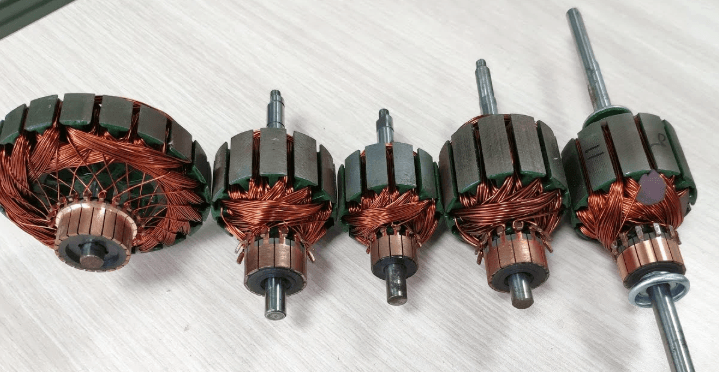
How HONEST Automation Supports Armature Winding Automation Projects
HONEST Automation provides customized motor manufacturing automation solutions for global motor manufacturers.
With extensive experience in motor winding and assembly automation, HONEST Automation helps customers develop suitable production solutions based on their motor specifications, production capacity, and automation objectives.
The company provides customized equipment for applications including brushed DC motors, automotive motors, and other motor manufacturing fields.
Beyond supplying individual machines, HONEST Automation focuses on complete manufacturing solutions, including process optimization, production line integration, installation support, and after-sales service.
For manufacturers looking to upgrade their winding processes, selecting the right automation partner is essential for achieving stable production performance and long-term manufacturing success.
Frequently Asked Questions About Armature Winding Machines
1. What is an armature winding machine used for?
An armature winding machine is used to automatically wind copper wire onto motor armatures. It improves winding accuracy, production efficiency, and consistency compared with manual winding processes.
2. What is the difference between a semi automatic and fully automatic armature winding machine?
A semi automatic armature winding machine requires operators to handle certain processes such as loading and unloading, while a fully automatic armature winding machine integrates more automated functions to achieve higher production efficiency and lower manual involvement.
3. How much does an armature winding machine cost?
The cost of an armature winding machine depends on factors such as motor specifications, automation level, production capacity, and customization requirements. Manufacturers usually need to provide detailed product information before receiving an accurate quotation.
4. How do I choose a reliable armature winding machine manufacturer?
A reliable supplier should have experience in motor automation, engineering capability, customization ability, successful application cases, and strong technical support throughout the project lifecycle.
Looking for the Right Armature Winding Machine Solution?
Choosing the right winding equipment is an important step for motor manufacturers seeking higher production efficiency, stable quality, and scalable manufacturing capability.
HONEST Automation provides customized armature winding solutions based on different motor applications and production requirements.
Contact HONEST Automation to discuss your armature winding machine project and receive a customized solution.