Recently, many clients have asked us about the difference between integrated layered twisting and traditional single-layer twisting in hairpin motor stator production lines.
At first glance, it might seem the only difference is the twisting method:
· Traditional single-layer twisting: Each wire in a layer is twisted individually in sequence to a specified angle before the entire layer is completed.
· Integrated layered twisting: Wires are grouped by layer, and all wires within the same layer are twisted simultaneously according to predefined parameters, forming the layer in a single operation.
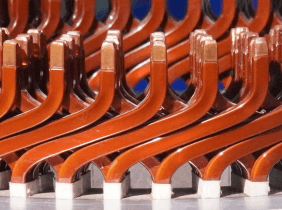
Compared to the traditional approach, the layered twisting process offers clear advantages in efficiency, coil uniformity, and electrical performance.
If you think the difference between layered twisting and single-layer twisting is merely “faster vs. slower,” that would be an oversimplification.
In mass production, the choice between layered and single-layer twisting affects not only cycle time, but also yield, coil uniformity, insulation quality, and even overall production line stability.
Process Differences Between Layered and Single-Layer Twisting:
· Traditional Single-Layer Twisting
Wires are twisted layer by layer in sequence: each layer is twisted to a specified angle first, and once all layers are completed, all layers are adjusted together to the final angle.
In short, traditional single-layer twisting involves two stages:
1. Each layer is twisted sequentially to an initial angle
2. All layers are twisted together to the final angle
Characteristics: actions are sequential and dispersed, with a clear “layer first, then overall” procedure.
· Layered Twisting
Adjacent layers are grouped, and two layers are twisted simultaneously in a single step to reach the final angle.
Characteristics: layers work in coordination and synchronously, without the separate “layer first, then overall” steps, resulting in a more compact and efficient process.
This process difference not only improves efficiency but also directly impacts coil consistency, insulation integrity, and production line stability.
Why Does Layered Twisting Use the “Two Layers at Once” Approach?
In hairpin motor stator, copper wires in different layers exhibit distinct bending radii, deformation amounts, and spring-back characteristics: wires in the outer layer have larger bending radii and smaller deformation, while inner layer wires have smaller radii and larger deformation.
· Limitations of Single-Layer Twisting: Traditional single-layer twisting twists each layer sequentially, followed by an overall adjustment. Because layers are processed in order, subsequent layers are affected by the preceding ones, causing minor deviations to accumulate across layers.
· Advantages of Layered Twisting: By twisting two layers simultaneously, both layers can coordinate and compensate for each other during the twisting process, rather than mechanically waiting for the previous layer to finish.
Core Principle: Layered twisting is not “layer first, then overall,” but rather “two layers move together,” achieving inter-layer coordination.
Key Advantages of Layered Twisting
Significantly Reduced Cumulative Error
In single-layer twisting, each twisting action introduces slight deviations, which accumulate layer by layer, increasing overall error. Layered twisting reduces the number of actions by twisting two layers simultaneously, minimizing sources of error and ensuring higher uniformity.
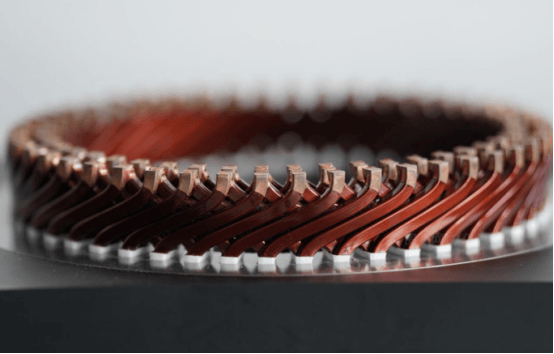
Reduced Insulation Damage
In traditional single-layer twisting, wires are clamped and twisted multiple times, causing repeated friction on the insulation layer. Layered twisting requires only a single clamping step to twist two layers simultaneously, significantly reducing the risk of insulation damage.
Faster Cycle Time and Higher Production Efficiency
· Single-layer twisting: layer-by-layer operation + overall adjustment = multiple actions
· Layered twisting: grouped synchronous operation = fewer actions
Fewer actions naturally shorten the production cycle, improving line efficiency.
Flexible Design for Complex Flat Wire Structures
As the number of layers in flat wire motors increases, the traditional “layer first, then overall” method becomes increasingly challenging: more actions, longer cycle times, and greater cumulative error.
Layered twisting uses a grouped synchronous logic where the action pattern within each group remains consistent. As a result, cycle time and error do not scale linearly with layer count, providing superior scalability and flexibility.
Applied in actual production, these advantages make the layered twisting process clearly superior in efficiency, coil consistency, and quality control.
· Low Yield: In traditional single-layer twisting, errors accumulate layer by layer, reducing production yield. Layered twisting simultaneously processes two layers, preventing error propagation and significantly improving coil consistency.
· Insulation Damage: Single-layer twisting requires multiple clamping and twisting steps, which can damage the wire insulation. Layered twisting completes two layers in a single clamping operation, minimizing insulation damage risk.
· Slow Production Cycle: Single-layer twisting involves many sequential actions, consuming more time. Layered twisting uses grouped synchronous operations, reducing action counts and shortening cycle time.
· Low Changeover Efficiency: Single-layer twisting requires independent adjustment of parameters for each layer, making changeovers slow. Layered twisting allows parameter setting by layer, significantly improving changeover speed.
In summary, layered twisting effectively addresses common production challenges in flat wire motor stator twisting, including low yield, insulation damage, slow cycle times, and inefficient changeovers.
As a company specialized in R&D and manufacturing of intelligent motor automation equipment, HONEST Automation has conducted extensive engineering validations of layered twisting on flat wire motor stator production lines, accumulating rich practical experience.
Core Design Principles of Layered Twisting Mechanisms
Grouped Synchronous Control: Ensures two layers of wire are twisted simultaneously, with independently adjustable parameters.
High-Rigidity Clamping System: Maintains wire position stability throughout the twisting process.
Real-Time Torque Monitoring: Provides live feedback during twisting, with automatic alarms for anomalies.
Process Flexibility: Not limited by slot or layer count, achieving naturally flat coil ends after twisting.
In haipin motor stator assembly line, every step—H-pin forming, twisting, welding, painting—is critical. However, twisting is often underestimated. Many manufacturers invest substantial resources in building production lines, only to find yields remain low and cycle times fall short. The root cause frequently lies in continuing to use the traditional “twist each layer to a set angle, then twist all layers together” approach, overlooking the fundamental improvement brought by simultaneous two-layer twisting.
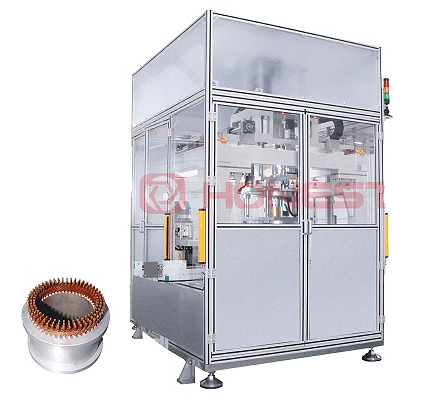
Choosing between layered and single-layer twisting is not a question of “which is more advanced,” but rather “which better meets your mass production objectives.” If you are facing challenges with twisting yield, production cycle, or insulation damage, consider inspecting the twisting process on your production line: is it stable and continuous, or does it require frequent stoppages and adjustments? Can the cycle time keep pace with the rest of the line, or is it a bottleneck?
Regardless of your current twisting method, we invite you to bring your product process parameters to HONEST Automation and discuss tailored solutions with our engineering team.
Submit your requirements online, and our sales and technical team will contact you promptly via video call, email, or phone to provide tailored solutions.