Driven by the rapid advancement of artificial intelligence and automation technologies, humanoid robots are accelerating from the proof-of-concept stage toward large-scale commercial adoption. In addition to the automotive industry continuing to benefit from intelligent manufacturing upgrades, humanoid robotics has also emerged as one of the most closely watched new sectors in the global technology and manufacturing landscape.
According to industry data, global humanoid robot shipments exceeded 13,000 units in 2025. Their application scenarios are rapidly expanding beyond research laboratories into industrial manufacturing, warehouse logistics, trailer unloading, and even household services. With continuous capital investment flowing into the sector, the humanoid robotics industry is entering a new phase of accelerated growth.
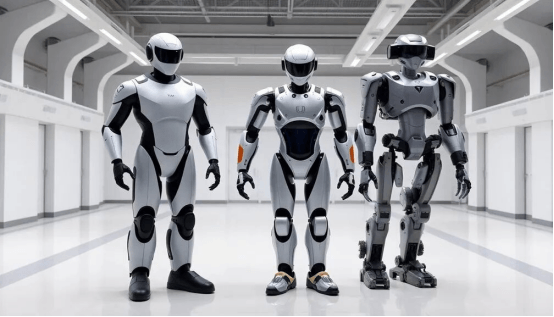
The second-generation Optimus humanoid robot developed by Tesla stands approximately 1.5 meters tall and weighs 57 kilograms. Powered by neural network technologies, the robot is designed to operate fully autonomously.
Tesla aims to achieve annual production capacity of 1 million humanoid robots, with a target unit price ranging from USD 20,000 to USD 30,000. Commercial deliveries are expected to begin as early as 2027.
According to industry analysis, Tesla currently maintains a significant competitive advantage in AI computing capabilities, battery technology, and scalable robotic actuator manufacturing, supported by its highly integrated vertical supply chain and manufacturing ecosystem.
Today, the global humanoid robot market is showing a clear regional competitive landscape. Chinese companies are leading in production capacity and hardware manufacturing, supported by a mature supply chain ecosystem and strong manufacturing capabilities, with approximately 87% of global humanoid robot production capacity concentrated in China. Meanwhile, U.S. companies continue to maintain leadership in advanced AI technologies and complex algorithm development, particularly in large AI models, robotic perception, and autonomous decision-making systems.
According to analysis from several international research institutions, the commercialization of humanoid robots is expected to accelerate further as key component costs continue to decline, Vision-Language-Action (VLA) models become increasingly mature, and global labor shortages persist across multiple industries. These trends are expected to drive broader industrial and commercial adoption of humanoid robots over the coming years.
Based on industry influence, technological capabilities, product development progress, and market attention, IBTimes has compiled a list of the world’s top 10 most competitive humanoid robot companies for industry professionals and companies across the robotics supply chain.
No.1 Tesla
The second-generation Optimus humanoid robot developed by Tesla stands approximately 1.5 meters tall and weighs 57 kilograms. Powered by neural network technologies, the robot is designed to operate fully autonomously.
Tesla aims to achieve annual production capacity of 1 million humanoid robots, with a target unit price ranging from USD 20,000 to USD 30,000. Commercial deliveries are expected to begin as early as 2027.
According to industry analysis, Tesla currently maintains a significant competitive advantage in AI computing capabilities, battery technology, and scalable robotic actuator manufacturing, supported by its highly integrated vertical supply chain and manufacturing ecosystem.
No.2 Figure AI
Headquartered in California, Figure AI has demonstrated strong competitiveness with its Figure 03 humanoid robot. The robot integrates palm-mounted cameras, fingertip sensors capable of detecting forces as small as 3 grams, and the company’s proprietary Helix Vision-Language-Action (VLA) model.
During an 11-month deployment at the BMW Group
manufacturing facility, the robot reportedly assisted in the production of 30,000 BMW X3 vehicles.
BMW is now expanding demand for next-generation humanoid robots across its European factories, while Figure AI aims to achieve annual shipments of 12,000 humanoid robots in the coming years.
No.3 AgiBot (Zhiyuan Robotics)
Headquartered in Shanghai, AgiBot (Zhiyuan Robotics) has rapidly emerged as one of China’s leading humanoid robotics companies. In 2025, the company delivered a total of 5,168 robots, and by March 2026, cumulative deliveries had surpassed 10,000 units for the first time.
AgiBot’s A2 and X2 models have already been deployed across multiple sectors, including industrial manufacturing, retail, and educational services. The company also showcased its latest humanoid robotics technologies at the 2026 Consumer Electronics Show.
On the hardware side, AgiBot benefits from strategic battery technology support from CATL, the global leader in power battery manufacturing. In software and embodied AI development, the company is accelerating investment in embodied intelligence technologies and has open-sourced its “AgiBot World 2026” robotics dataset to support broader AI ecosystem development.
No.4 Boston Dynamics
At the 2026 Consumer Electronics Show, Boston Dynamics, a subsidiary of Hyundai Motor Group, unveiled the fully electric version of its Atlas humanoid robot.
The new Atlas platform moves away from the highly dynamic hydraulic-based stunt demonstrations that previously made the robot famous online, shifting its focus toward practical industrial applications while still retaining its signature agility and mobility.
The robot offers up to four hours of battery life and is integrated with the company’s Orbit fleet management platform, making it suitable for pilot deployments in warehouse logistics and manufacturing environments.
Backed by more than 30 years of bipedal robotics research and development experience, Boston Dynamics plans to scale production capacity to approximately 30,000 units annually.
Atlas has successfully evolved from a viral internet robotics showcase into an enterprise-grade industrial humanoid robot, further strengthening Boston Dynamics’ position among the world’s leading humanoid robotics companies.
No.5 Unitree Robotics
The G1 humanoid robot developed by Unitree Robotics is priced at just USD 13,500, significantly lowering the barrier to entry for humanoid robotics technology and accelerating its path toward mass-market adoption.
Headquartered in Hangzhou, the company shipped approximately 4,200 robots in 2025 and continues to scale high-volume production of flexible, cost-effective humanoid robots designed for logistics, entertainment, and service-related applications.
Unitree’s H1 model has set a humanoid robot walking speed record and has already entered regular global shipment operations.
Unitree Robotics has demonstrated that high-performance humanoid robots do not necessarily require extremely high manufacturing costs, placing significant pricing pressure on many Western competitors in the global robotics market.
No.6 Agility Robotics
Headquartered in Oregon, Agility Robotics developed Digit, widely recognized as one of the first humanoid robots to achieve real-world commercial deployment at scale.
Digit is currently being used in warehouse operations for Amazon
and GXO Logistics, where it performs tasks such as tote picking and trailer unloading.
The robot’s distinctive backward-jointed leg design, combined with the company’s Agility Arc cloud-based software platform, helps address labor shortages in real-world material handling and logistics operations.
With total funding reaching USD 641 million, Agility Robotics has established a leading position in the logistics robotics sector, supported by proven return-on-investment performance in commercial deployments.
No.7 1X Technologies
Norway-based 1X Technologies focuses primarily on household and consumer applications. Its NEO humanoid robot weighs approximately 66 pounds (30 kilograms), featuring a lightweight design, up to four hours of battery life, and low-noise actuators optimized for home environments.
The robot is currently available for pre-order with a price of USD 20,000, or through a leasing model starting at USD 499 per month.
Through collaboration with OpenAI, 1X is developing humanoid robots capable of natural conversation and household task execution. While many robotics companies are competing for industrial and factory applications, 1X is positioning itself around what it believes could become the largest long-term market for humanoid robots: everyday home environments.
No.8 Apptronik
Headquartered in Austin, Apptronik developed the Apollo humanoid robot for third-party logistics (3PL), retail, and manufacturing applications.
Apollo weighs approximately 72.6 kilograms, offers up to four hours of battery life, and features a swappable battery system designed to support continuous operational use.
The robot’s early commercial pilot programs have primarily focused on reducing workplace injuries and handling repetitive tasks in warehouse and industrial environments.
With an engineering approach centered on return on investment (ROI), Apollo has gained strong interest from cost-conscious warehouse and logistics operators seeking practical automation solutions.
No.9 UBTECH Robotics
Based in Shenzhen, UBTECH Robotics delivered approximately 1,000 units of its Walker S and Alpha series robots in 2025.
The company’s humanoid robots are widely deployed across education, elderly care, and service-oriented applications.
As a publicly listed company with full-stack vertical integration across the robotics value chain, UBTECH is able to balance relatively accessible pricing with full-size, industrial-grade humanoid robot performance. This dual-track strategy gives the company a distinctive competitive advantage in the global robotics market.
No.10 Sanctuary AI
Based in Canada, Sanctuary AI stands out in the humanoid robotics industry for its advanced dexterous manipulation capabilities.
Its Phoenix humanoid robot features hydraulically actuated hands and is powered by embodied AI designed to simulate human-like cognition and decision-making processes.
Supported by Microsoft and NVIDIA, and backed by multiple pilot programs, Phoenix is positioned for high-precision collaborative tasks in real-world environments.
Although its current shipment scale remains relatively limited, Sanctuary AI continues to focus on human-like fine motor control, maintaining its position at the forefront of advanced humanoid dexterity research and development.
HONEST Automation provides turnkey assembly line solutions for humanoid robots, including dedicated equipment for various types of robot motors such as joint actuators, coreless motors for finger joints, and frameless torque motors. We have already delivered proven mass-production solutions for numerous humanoid robotics companies in China and overseas. You are welcome to contact us for inquiries or visit our facilities for further cooperation.
Humanoid Robot Assembly Line