The humanoid robotics industry is expanding rapidly. Many companies have successfully developed working robot prototypes and are now preparing for commercial production.
However, moving from a prototype to large-scale manufacturing is a major challenge. Manufacturers need efficient production systems that deliver consistent quality, high productivity, and lower production costs.
Successful humanoid robot mass production requires more than good product design. It also depends on advanced automation, standardized production processes, and intelligent quality control. Automated manufacturing helps companies improve production efficiency while maintaining stable product quality.

This guide explains how manufacturers can move from prototype to production by building automated manufacturing systems that support future business growth.
Why Transitioning from Prototype to Production Is Challenging
Building a prototype focuses on product development and performance verification. Production manufacturing focuses on speed, consistency, cost control, and quality management.
Many manual processes used during prototype development are not suitable for high-volume manufacturing. As production demand increases, manufacturers must replace manual operations with automated systems.
Automation helps manufacturers:
· Improve production efficiency
· Maintain consistent product quality
· Reduce manual labor
· Increase production capacity
· Lower manufacturing costs
· Improve product traceability
A well-designed production system provides a strong foundation for future manufacturing expansion.
Standardize the Manufacturing Process
The first step in successful automation is standardizing the production process. Every assembly operation should follow the same sequence to reduce variation and improve manufacturing consistency.
Clear production standards also make it easier to introduce automation equipment and improve overall factory performance.
Key Standardization Areas
Manufacturers should define:
· Assembly procedures
· Component specifications
· Quality standards
· Inspection methods
· Testing requirements
· Production documentation
Standardized processes reduce production risks and simplify future equipment upgrades.
Build an Automated Robotic Production Line
A modern robotic production line combines material handling, assembly, inspection, testing, and digital production management into one integrated manufacturing system.
Instead of relying on manual operations, automated equipment performs repetitive tasks with high speed and precision. This improves production efficiency while maintaining consistent product quality.
Typical Production Line Operations
An automated production line commonly includes:
· Component feeding
· Actuator assembly
· Motor installation
· Gearbox integration
· Sensor installation
· Wiring assembly
· Precision screw tightening
· Laser marking
These automated operations reduce assembly errors and improve production consistency.
Implement Robot Manufacturing Automation
Modern robot manufacturing automation uses industrial robots, servo motion systems, machine vision, and intelligent control systems to automate complex manufacturing processes.
Automation improves production accuracy while reducing dependence on manual labor. It also provides the flexibility needed to support different robot models and future production expansion.
Manufacturers can gradually increase automation levels as production volume grows, making investment more efficient over time.
Improve Quality Through Automated Inspection
Quality inspection should be integrated into every production stage. Automated inspection systems detect defects early, preventing faulty products from moving further along the production line.
Common Inspection Technologies
Modern production lines often use:
· Machine vision systems
· Laser measurement equipment
· Precision sensors
· Force monitoring systems
· Torque verification equipment
· Automatic data collection
Continuous inspection improves product quality, reduces waste, and supports reliable large-scale manufacturing.
Implement Automated Robot Assembly
As production volume increases, manufacturers need faster and more reliable assembly methods. Automated robot assembly replaces repetitive manual work with intelligent equipment that delivers high precision and consistent quality.
Modern automation systems combine robots, servo-controlled equipment, machine vision, and intelligent control software into one production workflow. Every assembly stage is synchronized to improve efficiency and reduce production errors.
Typical Automated Assembly Operations
An automated assembly system commonly performs:
· Actuator installation
· Motor integration
· Gearbox assembly
· Sensor installation
· Cable routing
· Precision screw tightening
· Adhesive dispensing
· Final module assembly
These automated processes improve assembly accuracy while reducing production time and labor costs.
Use Smart Manufacturing and Product Traceability
Digital manufacturing has become an essential part of modern robot production. Smart factories collect production data from every workstation and use it to improve manufacturing performance.
Assembly parameters, inspection results, testing records, equipment status, and product serial numbers are automatically stored throughout the production process. This complete traceability allows manufacturers to identify quality issues quickly and continuously improve production efficiency.
Digital manufacturing also supports predictive maintenance, production scheduling, equipment monitoring, and real-time factory management.
Prepare for Humanoid Robot Mass Production
Moving from prototype manufacturing to humanoid robot mass production requires scalable automation equipment. Manufacturers should invest in production systems that can increase capacity without reducing quality.
A flexible production line makes it easier to introduce new robot models while maintaining stable manufacturing performance. Equipment should also support future upgrades as production demand continues to grow.
Reliable automation allows manufacturers to reduce operating costs, improve delivery times, and respond quickly to changing market requirements.
Choose an Experienced Automation Partner
Selecting the right automation partner is an important part of building a successful production system. A reliable supplier should provide engineering expertise, customized automation solutions, installation support, operator training, and long-term technical service.
Manufacturers should also evaluate automation experience, quality control capability, production planning, and future expansion support before making an investment.
With extensive experience in automotive motor automation, HONEST Automation helps emerging robotics companies transition from prototype development to scalable manufacturing.
HONEST Automation is a global supplier of turnkey motor and robotic component manufacturing automation solutions, providing automated production equipment for BLDC motors, coreless motors, frameless torque motors, robot actuators, and precision robotic components.
Working with an experienced automation partner helps manufacturers reduce project risks, improve production efficiency, and build scalable manufacturing systems for long-term success.
Benefits of Automated Robot Manufacturing
Modern robot manufacturing automation provides significant advantages over traditional manufacturing methods. Integrated production systems connect every manufacturing process into one efficient workflow while maintaining consistent product quality.
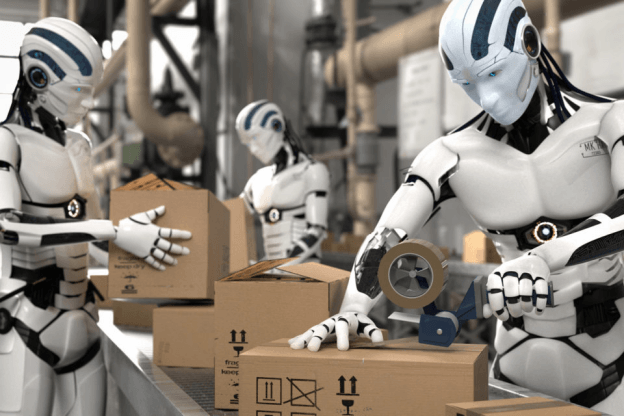
Key Benefits Include
Manufacturers can achieve:
· Higher production efficiency
· Better product consistency
· Reduced manual labor
· Faster production cycles
· Lower manufacturing costs
· Complete product traceability
· Easier production expansion
· Improved factory productivity
These advantages help manufacturers successfully move from prototype to production while supporting long-term business growth.
Final Thoughts
Moving from prototype to production requires more than a successful robot design. It requires intelligent automation, standardized manufacturing processes, and reliable quality control.
By investing in robot manufacturing automation and a scalable robotic production line, manufacturers can improve production efficiency, maintain consistent product quality, and achieve successful humanoid robot mass production.
Frequently Asked Questions (FAQs)
1. What is humanoid robot mass production?
Humanoid robot mass production is the large-scale manufacturing of humanoid robots using automated production systems that improve efficiency, maintain product quality, and reduce manufacturing costs.
2. Why is robot manufacturing automation important?
Robot manufacturing automation improves production efficiency, reduces manual errors, maintains consistent product quality, and supports scalable manufacturing for commercial robot production.
3. How can manufacturers move from prototype to production?
Manufacturers can move from prototype to production by standardizing manufacturing processes, implementing automation, integrating quality inspection, and building scalable production systems.
4. What is a robotic production line?
A robotic production line is an integrated manufacturing system that automates material handling, assembly, inspection, testing, and production management to manufacture robots efficiently.
5. What are the benefits of automated robot assembly?
Automated robot assembly improves assembly accuracy, increases production efficiency, reduces labor costs, supports complete product traceability, and enables manufacturers to scale production while maintaining consistent quality.
As a solution provider for humanoid robot and robotic component assembly, HONEST Automation offers prototyping solutions, standalone winding and assembly machines, semi-automatic systems, and fully automated assembly lines. Our solutions cover humanoid robot assembly and key components such as joint motors, harmonic reducers, actuators, finger joints, coreless motors, and frameless torque motors. Contact us for free case studies, customized solutions, and quotations.
Tel/WhatsApp/Wechat: +8618923732990
E-mail: sales@honest-hls.com