The automotive industry is becoming more competitive every year. Manufacturers are expected to produce high-quality electric motors faster while keeping production costs under control. At the same time, customers demand greater product reliability and complete quality traceability.
Traditional manufacturing methods can no longer meet these expectations. Manual production often leads to inconsistent quality, high labor costs, and lower productivity. This is why more manufacturers are investing in automotive motor automation to build smarter and more efficient production facilities.
This article explains how automation improves manufacturing efficiency, reduces production costs, and supports long-term business growth.
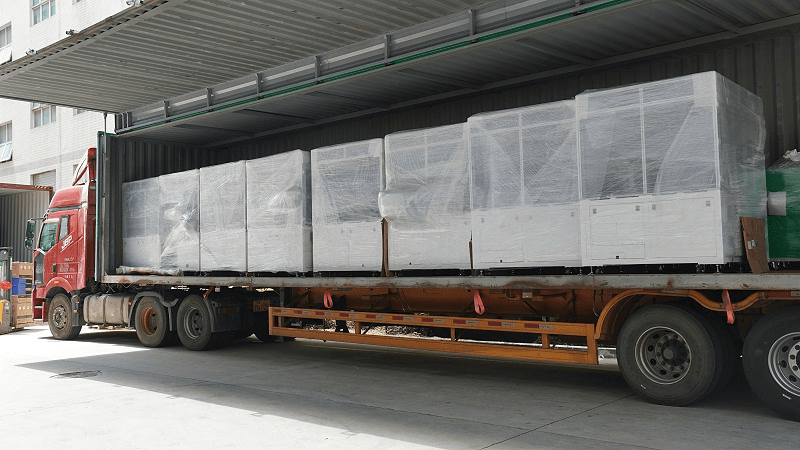
Why Automotive Motor Manufacturers Are Moving Toward Automation
The demand for electric vehicles (EVs), hybrid vehicles, and advanced automotive motors continues to increase. To keep up with market demand, manufacturers need production systems that deliver both speed and precision.
Modern automotive motor automation combines intelligent equipment, robotics, digital monitoring, and automated testing into one integrated production system.
Instead of depending on manual labor, manufacturers can achieve stable, repeatable, and scalable production.
Challenges Before Automation
Before adopting automotive motor automation, many manufacturers rely on manual operations or semi-automated production lines. While these methods may work for small production volumes, they become less efficient as demand grows.
Manual production increases operating costs, limits production capacity, and makes it difficult to maintain consistent quality. As automotive motors become more complex, manufacturers need more precise and repeatable production processes that manual operations cannot consistently deliver.
The most common challenges include the following.
High Labor Costs
Manual production requires a large workforce for assembly, winding, material handling, inspection, testing, and packaging. As production volumes increase, so does the need for skilled operators.
In addition to wages, manufacturers must also manage recruitment, training, overtime, employee turnover, and workplace safety. These factors significantly increase manufacturing costs and make production planning more difficult.
Labor shortages in many regions further increase the pressure on manufacturers to improve production efficiency.
Unstable Product Quality
Human operators naturally produce slight variations during repetitive manufacturing tasks. Even experienced workers cannot maintain exactly the same level of precision throughout every production shift.
These inconsistencies may result in:
· Incorrect component positioning
· Uneven winding quality
· Assembly errors
· Inconsistent torque values
· Higher defect rates
· More product rework
As a result, manufacturers may experience lower product reliability, increased warranty claims, and reduced customer satisfaction.
Low Overall Equipment Effectiveness (OEE)
Overall Equipment Effectiveness (OEE) measures how efficiently production equipment is being used. Manual production often results in lower OEE because of:
· Frequent production interruptions
· Manual loading and unloading
· Long equipment setup times
· Slow material transfer
· Waiting between production processes
· Unplanned equipment downtime
Lower OEE means manufacturers produce fewer motors within the same operating hours, increasing the overall cost per unit.
Limited Production Capacity
As customer demand grows, manual production lines struggle to increase output without hiring more workers or adding additional shifts.
Production expansion becomes expensive and difficult because every increase in output depends on additional labor rather than improved manufacturing efficiency.
This limits a company's ability to respond quickly to market demand.
Lack of Product Traceability
Many manual production processes rely on paper records or basic documentation. When a quality issue occurs, manufacturers may find it difficult to identify:
· Which production batch is affected
· Which operator assembled the product
· Which machine was used
· What process parameters were recorded
· Which test results belong to the product
Without complete traceability, root cause analysis becomes slower and quality management becomes more challenging.
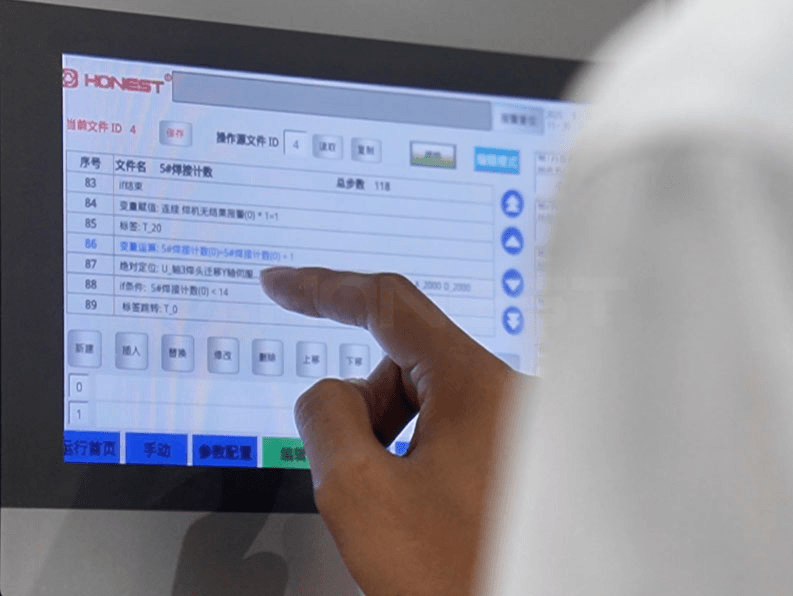
Higher Production Costs
The combination of high labor expenses, material waste, production delays, equipment downtime, and product rework significantly increases manufacturing costs.
Over time, these inefficiencies reduce profitability and make it more difficult for manufacturers to remain competitive in the rapidly growing automotive motor industry.
How Automation Improves Manufacturing Efficiency
Modern automotive motor automation replaces repetitive manual tasks with intelligent equipment that operates with high precision and consistency.
Automation improves every stage of the manufacturing process, from component preparation to final testing.
1. Reduces Labor Dependency
One of the biggest advantages of automation is reducing dependence on manual labor. Automated systems can perform repetitive tasks continuously with minimal operator involvement.
Examples include:
· Automatic winding
· Rotor assembly
· Stator assembly
· Screw tightening
· Laser marking
· Product testing
· Material transfer
This allows manufacturers to operate with fewer workers while increasing production output.
2. Improves Product Consistency
Automation eliminates many of the variations caused by manual operations. Servo-controlled equipment, robotic systems, and machine vision ensure every production process follows the same parameters.
This improves:
· Assembly accuracy
· Winding precision
· Welding quality
· Testing reliability
· Overall motor performance
Higher consistency also reduces scrap rates and improves customer satisfaction.
3. Increases Motor Production Efficiency
Improving motor production efficiency is one of the primary goals of factory automation. An automated production line operates continuously with minimal interruptions.
Benefits include:
· Faster production cycles
· Shorter changeover times
· Higher equipment utilization
· Reduced production bottlenecks
· Better workflow management
These improvements allow manufacturers to produce more motors within the same production time.
4. Enables Complete Product Traceability
Modern manufacturing requires complete quality records for every product. Automated systems automatically collect production data throughout the manufacturing process.
Typical traceability data includes:
· Product serial number
· Production date and time
· Process parameters
· Testing results
· Equipment status
· Quality inspection records
Complete traceability helps manufacturers identify production issues quickly while meeting automotive quality standards.
5. Supports Smart Manufacturing
Today's factories are becoming more connected through digital technologies. Smart manufacturing combines automation with intelligent software systems such as Manufacturing Execution Systems (MES), ERP integration, industrial IoT, and real-time production monitoring.
These technologies provide:
· Live production dashboards
· Equipment performance monitoring
· Predictive maintenance
· Production scheduling
· Quality analysis
· Data-driven decision making
Smart manufacturing helps managers optimize factory performance while reducing unnecessary downtime.
6. Makes Production Easy to Scale
As business grows, manufacturers need production systems that can expand without major disruptions.
Automated production lines can easily support:
· Higher production volumes
· New motor models
· Additional production stations
· Future technology upgrades
· Flexible manufacturing requirements
This scalability protects long-term investments and supports future business growth.
Business Benefits of Automotive Motor Automation
From a management perspective, automation delivers measurable improvements across the entire factory.
Before Automation | After Automation |
High labor costs | Reduced manpower requirements |
Unstable product quality | Higher production consistency |
Low OEE | Improved equipment utilization |
Manual inspections | Automated quality inspection |
Limited production capacity | Scalable manufacturing |
Difficult quality tracking | Complete product traceability |
Higher operating costs | Lower cost per unit |
These improvements increase profitability while strengthening long-term competitiveness.
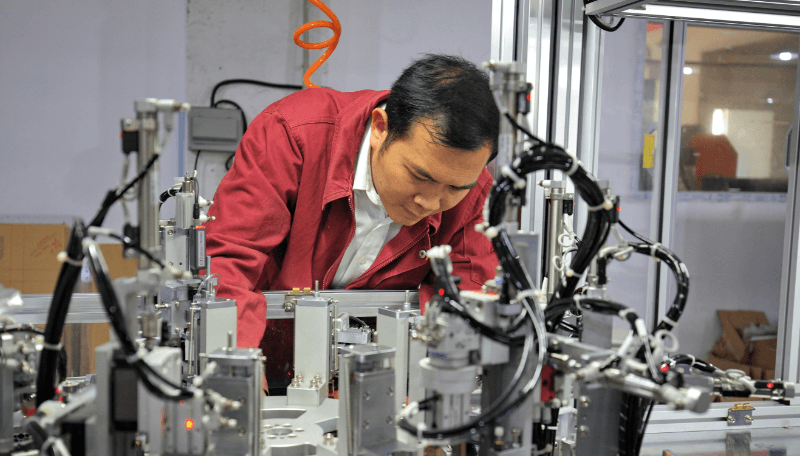
Why Manufacturers Choose HONEST Automation
Successful automation requires more than advanced equipment. It requires an experienced automation partner.
HONEST Automation helps motor manufacturers improve motor production efficiency through intelligent automotive motor automation systems designed for modern manufacturing.
The company provides customized automation solutions covering:
· Automatic winding
· Motor assembly
· Automated testing
· Intelligent inspection
· Production line integration
· Smart manufacturing systems
Rather than supplying standalone machines, HONEST Automation develops complete automation solutions based on each customer's production requirements.
Its engineering team also provides overseas installation, commissioning, operator training, and on-site technical support to help manufacturers achieve stable, efficient, and scalable production.
Final Thoughts
Manufacturers that continue relying on manual production will face increasing challenges as demand for automotive motors continues to grow.
Investing in automotive motor automation allows manufacturers to reduce labor costs, improve product consistency, increase motor production efficiency, and build a scalable production system for future growth.
Combined with smart manufacturing technologies, automation creates a more efficient, reliable, and competitive factory capable of meeting the demanding requirements of today's automotive industry.
Frequently Asked Questions (FAQs)
1. What is automotive motor automation?
Automotive motor automation uses intelligent machines, robotics, and digital control systems to automate motor manufacturing processes such as winding, assembly, testing, inspection, and material handling.
2. How does automation improve motor production efficiency?
Automation increases motor production efficiency by reducing manual operations, minimizing production delays, improving equipment utilization, and maintaining consistent product quality.
3. What is smart manufacturing in motor production?
Smart manufacturing combines automation, MES, IoT, robotics, and data analytics to monitor production in real time, improve decision-making, and optimize factory performance.
4. How does automation reduce production costs?
Automation lowers labor costs, reduces material waste, minimizes product defects, shortens production cycles, and improves equipment efficiency, resulting in lower manufacturing costs.
5. Why choose HONEST Automation for motor manufacturing solutions?
HONEST Automation provides customized intelligent automation systems that help motor manufacturers improve production efficiency, product quality, traceability, and scalable manufacturing through complete automated production solutions.