Electric vehicles (EVs) are transforming the automotive industry, creating a growing demand for high-performance electric drive motors. Among the latest motor technologies, hairpin motors have become the preferred choice for many EV manufacturers because they offer higher efficiency, greater power density, and improved thermal performance.
However, producing hairpin motors requires advanced manufacturing technology. Traditional production methods cannot deliver the precision, consistency, and production speed needed for large-scale manufacturing. This is why manufacturers are investing in a modern hairpin motor production line that combines intelligent automation with high-precision equipment.
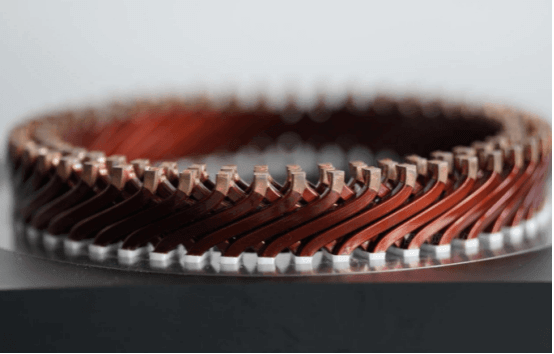
This guide explains why hairpin winding is widely used, the manufacturing challenges involved, and the key automation solutions for EV motor production.
Why Is Hairpin Winding Used in EV Motors?
Hairpin winding has become the industry standard for many electric vehicle drive motors because it offers several advantages over traditional round-wire winding.
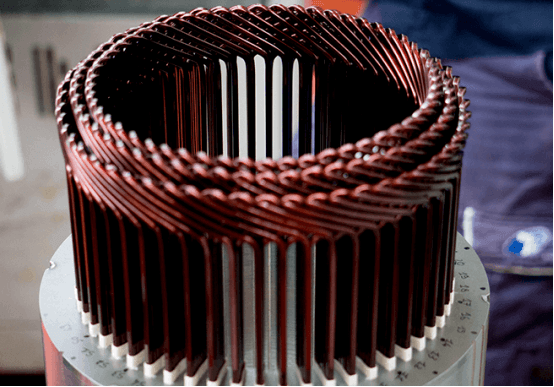
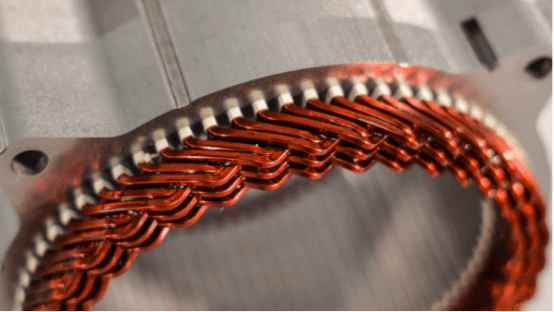
Instead of using round copper wire, hairpin technology uses rectangular copper conductors that are bent into a hairpin shape before being inserted into the stator.
This design provides several benefits:
· Higher slot fill factor
· Lower electrical resistance
· Better heat dissipation
· Higher motor efficiency
· Increased power density
· Improved high-speed performance
· Better reliability for automotive applications
These advantages help EV manufacturers produce compact, lightweight, and highly efficient drive motors.
Manufacturing Challenges of Hairpin Motors
Although hairpin motors offer excellent performance, their manufacturing process is much more complex than conventional motor production.
Every process requires extremely high precision. Even small deviations can affect motor efficiency, welding quality, and overall reliability.
The most common manufacturing challenges include:
· Maintaining accurate hairpin dimensions
· Precise insertion into stator slots
· Avoiding conductor deformation
· Achieving consistent welding quality
· Controlling twisting accuracy
· Ensuring electrical insulation
· Maintaining production consistency
· Meeting high-volume production requirements
These challenges make automation essential for modern EV motor manufacturing.
Complete Hairpin Motor Manufacturing Process
A modern hairpin motor production line integrates multiple automated stations into one continuous manufacturing system. Each process is carefully controlled to improve efficiency and product quality.
1. Hairpin Forming
The manufacturing process begins with copper wire forming. A high-precision hairpin winding machine cuts, straightens, bends, and forms rectangular copper wire into the required hairpin shape.
Servo-controlled forming equipment ensures every conductor has identical dimensions before moving to the next process.
Key benefits include:
· High forming accuracy
· Consistent dimensions
· Fast production speed
· Minimal material waste
· Automatic parameter adjustment
2. Hairpin Inserting
After forming, the hairpins are automatically inserted into the stator slots. This process requires accurate positioning because incorrect insertion may damage the insulation or deform the conductors.
Modern automation systems use:
· Robotic handling
· Vision-guided positioning
· Precision insertion mechanisms
· Automatic alignment systems
These technologies improve insertion accuracy while reducing manual handling.
3. Hairpin Twisting
Once the conductors are inserted, the exposed wire ends must be twisted into the correct position for welding.
Twisting is one of the most important stages of EV motor manufacturing because it determines the quality of the electrical connection.
Automatic twisting machines ensure:
· Uniform twisting angles
· Accurate conductor positioning
· Reduced conductor stress
· Stable welding preparation
Servo-controlled motion systems guarantee repeatable results throughout mass production.
4. Hairpin Welding
After twisting, the conductor ends are permanently joined through automated welding. Laser welding is widely used because it produces strong, clean, and highly conductive electrical joints.
Advanced welding systems continuously monitor:
· Welding position
· Laser power
· Welding depth
· Joint quality
· Process stability
Automatic inspection systems verify each weld to ensure consistent quality and reduce defect rates.
5. Insulation and Finishing
Following welding, the stator moves through insulation and finishing processes.
Typical operations include:
· Insulation coating
· Resin impregnation
· Drying and curing
· Surface cleaning
· Final visual inspection
These processes improve insulation performance and increase motor durability under demanding operating conditions.
6. End-of-Line Testing
Every hairpin motor must pass comprehensive testing before shipment. A modern hairpin motor production line automatically performs multiple inspections to verify product quality.
Testing typically includes:
· Electrical performance testing
· High-voltage testing
· Insulation resistance testing
· Continuity testing
· Functional testing
· Noise testing
· Vibration testing
Testing data is automatically recorded to ensure complete product traceability.
Automation Technologies That Improve Production
Modern EV motor manufacturing relies on intelligent automation to improve productivity and maintain automotive-grade quality.
A complete production line often includes:
· Automatic material feeding
· Robotic handling systems
· Servo-controlled positioning
· Machine vision inspection
· Laser welding technology
· Intelligent testing equipment
· Automatic data collection
· MES integration
· Product traceability systems
These technologies reduce human errors while increasing production speed and product consistency.
Benefits of a Fully Automated Hairpin Motor Production Line
Compared with manual production, automated manufacturing provides significant advantages.
Key benefits include:
· Higher production efficiency
· Consistent product quality
· Reduced labor dependency
· Faster production cycles
· Lower operating costs
· Improved traceability
· Better process control
· Support for high-volume EV motor production
These advantages help manufacturers meet the growing demand for electric vehicle motors.
Why Manufacturers Choose HONEST Automation
Automation plays a critical role in producing high-performance hairpin motors.
HONEST Automation has developed multiple generations of hairpin motor production line technologies to support modern EV motor manufacturing. The company specializes in customized automation solutions covering the complete production process, including hairpin winding, stator assembly, welding, testing, and intelligent manufacturing systems.
Its product portfolio includes advanced hairpin winding machine solutions, automated assembly equipment, and complete production line integration designed for mass production.
HONEST Automation works closely with automotive manufacturers to provide customized equipment, overseas installation, commissioning, operator training, and on-site technical support. These solutions help customers improve production efficiency, maintain consistent quality, and achieve reliable large-scale manufacturing.
Final Thoughts
Hairpin motors are becoming the preferred solution for high-performance electric vehicle drive systems. However, their complex manufacturing process requires advanced automation to achieve the precision and efficiency demanded by the automotive industry.
A modern hairpin motor production line combines automated forming, insertion, twisting, welding, testing, and intelligent manufacturing technologies into one integrated system. By investing in the right automation solution, manufacturers can improve product quality, reduce production costs, and build a scalable manufacturing process that supports the future of EV motor manufacturing.
Frequently Asked Questions (FAQs)
1. What is a hairpin motor production line?
A hairpin motor production line is an automated manufacturing system that produces EV hairpin motors through forming, inserting, twisting, welding, testing, and quality inspection processes.
2. Why is hairpin winding used in EV motors?
Hairpin winding provides a higher slot fill factor, lower electrical resistance, better heat dissipation, and improved motor efficiency, making it ideal for high-performance electric vehicle motors.
3. What does a hairpin winding machine do?
A hairpin winding machine automatically cuts, straightens, bends, and forms rectangular copper wire into precise hairpin conductors used in EV motor stators.
4. Why is automation important in EV motor manufacturing?
Automation improves production speed, reduces labor dependency, increases product consistency, minimizes manufacturing errors, and supports large-scale production.
5. How does HONEST Automation support hairpin motor manufacturing?
HONEST Automation develops customized automation solutions for EV motor manufacturing, including hairpin winding machines, automated production lines, welding systems, testing equipment, intelligent manufacturing systems, and complete production line integration.