The automotive industry is entering a new era of intelligent manufacturing. The rapid growth of electric vehicles (EVs), advancements in artificial intelligence (AI), and Industry 4.0 technologies are changing how automotive motors are designed, manufactured, and tested.
Manufacturers are no longer focused only on increasing production capacity. They also want smarter factories that improve quality, reduce costs, and respond quickly to changing market demands.
Understanding these automotive motor manufacturing trends can help OEMs, Tier 1 suppliers, and motor manufacturers prepare for the future.
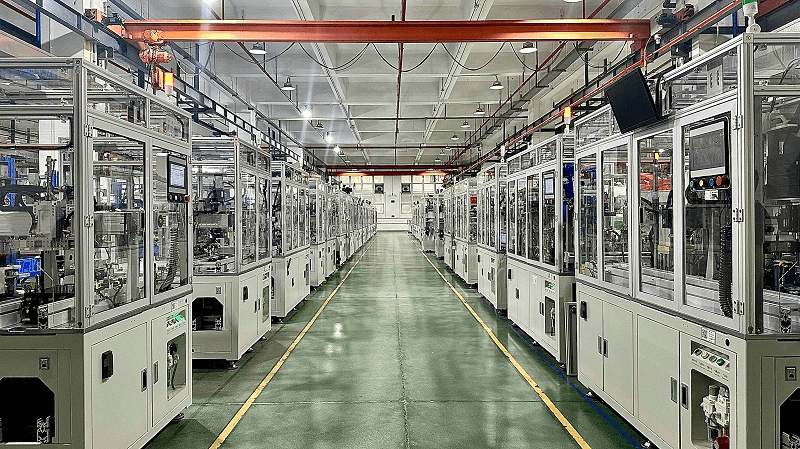
The Future of Automotive Motor Manufacturing
As global demand for electric mobility continues to rise, manufacturers are investing in intelligent production technologies that improve efficiency and support large-scale production.
Future factories will combine automation, AI, digital systems, and data-driven decision-making into one connected manufacturing environment.
The goal is not only to produce more motors but also to produce them faster, more accurately, and with greater flexibility.
1. Growing Demand for EV Motors
The expansion of the electric vehicle market is one of the biggest drivers of change in motor manufacturing. Governments worldwide are encouraging EV adoption through environmental policies and investments in charging infrastructure. As a result, automotive manufacturers continue to increase EV production.
This growing demand requires manufacturers to build production lines that offer:
· Higher production capacity
· Faster production cycles
· Consistent product quality
· Flexible manufacturing
· Lower production costs
Modern Industry 4.0 motor production systems help manufacturers meet these requirements while supporting future expansion.
2. New Opportunities in Humanoid Robot Motors
Another fast-growing market is humanoid robotics. Advanced robots require compact, lightweight, and highly efficient motors capable of delivering precise motion and reliable performance.
Although production volumes are currently lower than automotive applications, demand is expected to increase rapidly over the coming years.
Many of the technologies used in automotive motor manufacturing—including automated winding, precision assembly, intelligent testing, and traceability—can also support humanoid robot motor production.
Manufacturers that invest in flexible automation today will be better prepared for these emerging opportunities.
3. Flexible Manufacturing Becomes Essential
Traditional production lines were often designed for a single product. Today's manufacturers need production systems that can quickly adapt to changing customer requirements and multiple motor models.
A modern smart factory supports flexible manufacturing by allowing production lines to:
· Switch between different motor sizes
· Handle multiple product models
· Increase or reduce production volume
· Add new production stations
· Upgrade equipment without major redesigns
Flexible manufacturing helps companies respond faster to market changes while protecting long-term investments.
4. AI-Powered Quality Inspection
Artificial intelligence is becoming an important part of modern quality control. Instead of relying only on traditional inspection methods, AI systems analyze production data and images to detect defects with greater speed and accuracy.
AI-powered inspection systems can identify:
· Surface defects
· Assembly errors
· Missing components
· Dimension deviations
· Welding defects
· Abnormal production patterns
Over time, AI continuously improves inspection accuracy by learning from production data.
This reduces false inspections, improves product consistency, and lowers quality-related costs.
5. Digital Twin Technology
Digital Twin technology is transforming the way manufacturers design and manage production lines. A digital twin is a virtual model of a physical production system. It allows engineers to simulate manufacturing processes before actual production begins.
Manufacturers can use digital twins to:
· Test production layouts
· Optimize workflows
· Identify bottlenecks
· Predict equipment performance
· Reduce commissioning time
· Improve future production planning
This reduces project risks while improving overall factory efficiency.
6. MES Integration for Smart Production
Manufacturing Execution Systems (MES) are becoming the digital backbone of modern factories.
MES connects machines, operators, production schedules, and quality systems into one centralized platform.
A fully integrated smart factory uses MES to:
· Monitor production in real time
· Collect manufacturing data
· Track product traceability
· Schedule production automatically
· Analyze equipment performance
· Generate production reports
· Improve quality management
MES provides managers with real-time visibility, allowing faster and more informed production decisions.
7. Industry 4.0 Is Changing Motor Production
Industry 4.0 motor production combines automation, robotics, AI, IoT sensors, cloud computing, and data analytics to create highly connected manufacturing environments.
Instead of operating independently, machines communicate with one another and exchange production data in real time.
Industry 4.0 technologies enable manufacturers to:
· Improve production efficiency
· Reduce equipment downtime
· Increase automation levels
· Support predictive maintenance
· Optimize energy consumption
· Improve resource utilization
· Enhance product traceability
These capabilities help manufacturers remain competitive in an increasingly digital industry.
Benefits of Smart Factory Development
Moving toward a smart factory offers long-term advantages for automotive motor manufacturers.
Key benefits include:
· Higher production efficiency
· Better product consistency
· Reduced labor dependency
· Faster production planning
· Improved quality control
· Complete product traceability
· Lower operating costs
· Easier production expansion
· Better decision-making through real-time data
These improvements help manufacturers increase productivity while preparing for future market demands.
Why Manufacturers Choose HONEST Automation
The future of automotive motor manufacturing depends on intelligent automation and digital technologies.
HONEST Automation focuses on intelligent motor manufacturing solutions that integrate automation, digitalization, and smart production technologies.
The company provides customized solutions covering:
· Automated winding systems
· Motor assembly lines
· Intelligent testing equipment
· AI-supported quality inspection
· MES integration
· Production line integration
· Smart manufacturing solutions
Rather than supplying individual machines, HONEST Automation develops complete automation systems tailored to each customer's production requirements.
Its engineering team also provides installation, commissioning, operator training, and on-site technical support, helping manufacturers build efficient and future-ready production facilities.
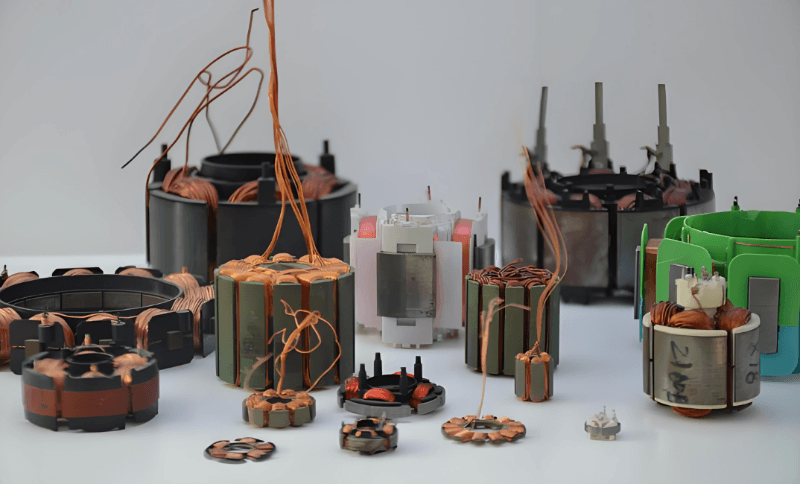
Final Thoughts
The future of automotive motor manufacturing is driven by automation, artificial intelligence, and digital transformation.
Growing EV demand, emerging humanoid robot applications, flexible manufacturing, AI-powered quality inspection, digital twin technology, MES integration, and Industry 4.0 motor production are reshaping modern factories.
Manufacturers that invest in these technologies today will be better positioned to improve productivity, reduce costs, maintain high product quality, and remain competitive in the rapidly evolving automotive industry.
Building a connected smart factory is no longer a long-term vision—it is becoming the new standard for successful automotive motor manufacturing.
Frequently Asked Questions (FAQs)
1. What are the latest automotive motor manufacturing trends?
Current automotive motor manufacturing trends include EV motor production, AI-powered quality inspection, smart factories, digital twins, flexible manufacturing, MES integration, and Industry 4.0 technologies.
2. What is a smart factory?
A smart factory is a digitally connected manufacturing facility that uses automation, IoT, AI, robotics, and real-time data to improve production efficiency, quality, and decision-making.
3. How does Industry 4.0 improve motor production?
Industry 4.0 motor production connects machines, software, and production data into one intelligent system. It improves automation, predictive maintenance, quality control, traceability, and overall manufacturing efficiency.
4. Why is AI important in automotive motor manufacturing?
AI improves quality inspection by detecting defects more accurately, analyzing production data, reducing human error, and supporting predictive maintenance for manufacturing equipment.
5. How does HONEST Automation support smart motor manufacturing?
HONEST Automation develops intelligent motor manufacturing solutions that integrate automation, digitalization, MES, AI-enabled inspection, and smart production technologies to help manufacturers build efficient, scalable, and future-ready production systems.