The global humanoid robotics industry is expanding rapidly. As demand for intelligent robots continues to grow, manufacturers need efficient production systems that can deliver large quantities of high-quality joint actuators.
These actuators are the core motion components of humanoid robots, providing precise movement, balance, and force control. Their performance directly affects the reliability and efficiency of the entire robot.
Traditional manual assembly is no longer suitable for large-scale production. It is slower, less consistent, and more dependent on skilled labor. To meet increasing market demand, manufacturers are investing in automated production systems that improve efficiency, maintain product quality, and reduce production costs.
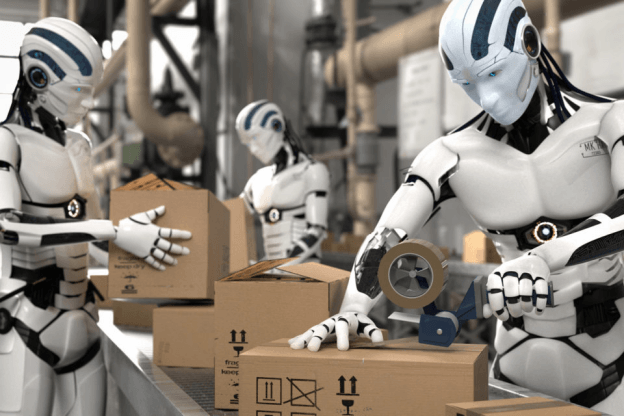
Modern humanoid robot joint actuator manufacturing combines precision assembly, intelligent inspection, automated testing, and digital production management into one integrated workflow. This approach supports stable production while ensuring every actuator meets strict quality requirements.
This guide explains the complete manufacturing process used for the mass production of robot joints and the technologies that make high-volume production possible.
Why Automated Manufacturing Is Essential
Humanoid robot joint actuators contain many precision components, including motors, gears, bearings, encoders, housings, and electronic parts. Every component must be assembled with high accuracy to ensure smooth motion and long service life.
Manual production can create variations in assembly quality and reduce manufacturing efficiency. As production volumes increase, these challenges become even more difficult to manage.
Automated manufacturing helps manufacturers:
· Increase production efficiency
· Improve product consistency
· Reduce manual errors
· Lower labor costs
· Improve product traceability
· Support high-volume production
By replacing manual operations with intelligent automation, manufacturers can achieve reliable and repeatable production results.
Component Preparation and Inspection
Every actuator begins with carefully prepared components. Before assembly starts, all mechanical and electrical parts must be inspected to ensure they meet design specifications.
A modern production line prepares:
· BLDC or frameless torque motors
· Precision gears
· Bearings
· Shafts
· Encoders
· Housings
· Fasteners
· Electronic connectors
Automatic feeding systems and machine vision equipment inspect these components before they enter the assembly process. Early inspection helps prevent defects from moving to later production stages.
Precision Motor Assembly
Motor assembly is one of the most important stages of humanoid robot joint actuator manufacturing. The motor provides the power required for accurate joint movement, making assembly precision essential.
Automated assembly equipment accurately positions motor components while controlling assembly force and alignment. Servo-controlled systems ensure repeatable manufacturing quality across every production cycle.
Modern production lines also verify motor dimensions and assembly accuracy before moving to the next process.
Robot Joint Actuator Assembly Line
A modern robot joint actuator assembly line integrates multiple production processes into one continuous workflow. Instead of transferring components manually between workstations, automated handling systems move products through every manufacturing stage.
Typical Assembly Operations
The assembly line commonly includes:
· Motor installation
· Gear assembly
· Bearing fitting
· Shaft installation
· Encoder integration
· Precision screw tightening
· Adhesive dispensing
· Laser marking
Automated equipment performs these operations with high accuracy while maintaining consistent production speed.
Robotic Joint Production Process
The complete robotic joint production process combines precision assembly with intelligent quality control. Every manufacturing step is monitored to ensure product consistency and minimize production variation.
Sensors, machine vision systems, and servo-controlled equipment work together to verify component positioning, assembly force, and alignment throughout production.
This integrated manufacturing approach improves efficiency while ensuring each actuator meets demanding performance requirements.
Robot Actuator Automation Equipment
Modern robot actuator automation equipment combines intelligent machines, robotics, and digital control systems to improve production efficiency. Instead of relying on manual assembly, automated equipment performs every manufacturing step with high precision and repeatability.
A complete automation solution may include robotic handling systems, servo-controlled assembly stations, machine vision inspection, automatic screw tightening, laser marking, and intelligent testing equipment. These technologies work together to reduce production errors while increasing manufacturing speed.
Automated equipment also makes it easier to switch between different actuator models, allowing manufacturers to respond quickly to changing market demands.
End-of-Line Testing and Quality Verification
Every joint actuator should undergo comprehensive testing before leaving the production line. End-of-line testing confirms that each product meets design specifications and performs reliably under operating conditions.
Typical Testing Processes
Modern testing stations usually perform:
· Torque testing
· Position accuracy testing
· Speed testing
· Noise testing
· Vibration analysis
· Electrical performance testing
· Functional testing
Testing data is automatically recorded and linked to each product. This improves quality management and allows manufacturers to trace every actuator back to its production history if required.
Supporting the Mass Production of Robot Joints
As the robotics industry continues to grow, manufacturers need production systems that can maintain both speed and precision. A scalable manufacturing system should support continuous production while ensuring consistent product quality across thousands of units.
The mass production of robot joints requires synchronized automation, intelligent quality inspection, and stable manufacturing processes. Automated production lines reduce dependence on manual labor while improving equipment utilization and overall factory efficiency.
By integrating every manufacturing stage into one intelligent workflow, manufacturers can achieve stable production capacity and meet the increasing demand for humanoid robots.
Smart Manufacturing and Product Traceability
Modern factories require more than automated machines. Digital manufacturing systems collect and analyse production data in real time to improve quality and efficiency.
Throughout the manufacturing process, production data such as assembly parameters, inspection results, test records, and product serial numbers are automatically stored. This complete traceability helps manufacturers quickly identify production issues and maintain strict quality standards.
Digital production management also supports predictive maintenance, production scheduling, and continuous process improvement, making manufacturing more efficient and reliable.
Customized Automation Solutions for Future Growth
Every robotics manufacturer has different production goals. Some focus on pilot production, while others require fully automated lines for large-scale manufacturing. Choosing a supplier that offers customized solutions ensures the production system can adapt as business requirements change.
HONEST Automation develops customized robotic component assembly solutions to help manufacturers move from prototype production to stable mass production.
HONEST Automation is a global supplier of turnkey motor and robotic component manufacturing automation solutions, providing automated production equipment for BLDC motors, coreless motors, frameless torque motors, robot actuators, and precision robotic components.
With customized automation, manufacturers can improve production efficiency, maintain consistent product quality, and prepare for future expansion without major equipment redesign.

Final Thoughts
Modern humanoid robot joint actuator manufacturing requires more than individual machines. It depends on integrated automation, precision assembly, intelligent testing, and digital quality management.
By investing in advanced production solutions, manufacturers can achieve reliable mass production of robot joints while maintaining the high quality and consistency required by today's rapidly growing robotics industry.
Frequently Asked Questions (FAQs)
1. What is humanoid robot joint actuator manufacturing?
Humanoid robot joint actuator manufacturing is the automated process of producing robot joint actuators through precision assembly, quality inspection, testing, and intelligent production management to ensure reliable performance.
2. What is included in a robot joint actuator assembly line?
A modern robot joint actuator assembly line typically includes motor assembly, gear installation, bearing fitting, encoder integration, precision fastening, vision inspection, laser marking, and automated testing.
3. Why is robot actuator automation equipment important?
Robot actuator automation equipment improves production efficiency, reduces manual errors, increases product consistency, and supports stable, high-volume manufacturing.
4. How does the robotic joint production process improve product quality?
The robotic joint production process combines precision assembly, intelligent inspection, automated testing, and digital traceability to ensure every actuator meets strict quality and performance standards.
5. How can manufacturers achieve the mass production of robot joints?
Manufacturers can achieve the mass production of robot joints by adopting integrated automation systems that combine precision assembly, real-time quality inspection, end-of-line testing, and digital production management for efficient and scalable manufacturing.
Need a Humanoid Robot Joint Actuator Assembly Line?
Looking for a reliable manufacturing solution for humanoid robot joint motors or actuators? Contact HONEST Automation today.
We provide complete automation solutions for humanoid robot components, including joint motor assembly, actuator production, harmonic reducer assembly, finger joint motor manufacturing, dexterous hand assembly, and full humanoid robot production systems.
From prototype development and sample testing to standalone machines and fully automated production lines, HONEST supports robot manufacturers with flexible and scalable manufacturing solutions.
Get in touch with us to discuss your humanoid robot manufacturing needs.
Tel/WhatsApp/Wechat: +8618923732990
E-mail: sales@honest-hls.com