Choosing the right motor assembly line supplier requires more than comparing prices. Manufacturers should evaluate the supplier’s engineering expertise, experience with similar motor production projects, customized automation solution capabilities, trial production and validation processes, as well as after-sales support including on-site training, remote debugging, and maintenance services. A reliable partner can help improve production efficiency, product quality, and long-term manufacturing stability.
In today’s highly competitive motor manufacturing industry, one of the biggest mistakes companies make when purchasing a motor assembly line is focusing too heavily on price alone. Low-cost solutions often appear attractive during the initial quotation stage, especially under budget pressure. However, many manufacturers later discover that the real cost of choosing the wrong supplier is far higher than the money saved upfront.
Problems such as poor assembly precision, unstable production performance, frequent equipment downtime, lack of technical support, and difficulties in future line upgrades can seriously affect production efficiency and delivery capability. In some cases, these issues may even lead to delayed customer orders, increased operational costs, and long-term damage to business competitiveness.
Unlike standardized consumer products, a motor assembly line is a long-term manufacturing investment. It directly impacts production capacity, product quality, yield rate, automation efficiency, and future scalability. Choosing the right supplier means securing stable production and reliable technical support for years to come. Choosing the wrong one can create ongoing risks throughout the entire production lifecycle.
So, how can motor manufacturers identify a truly reliable automation partner among so many equipment suppliers?
The following five key criteria provide a practical framework for evaluating motor assembly line companies and avoiding the common trap of selecting equipment based solely on the lowest price.
Before discussing these selection criteria, it is important to understand two common realities in the industrial equipment market:
Why do low-price solutions seem so attractive to buyers? And why are some higher-priced suppliers continuously chosen by leading motor manufacturers?
Most purchasing teams understand that extremely low prices often come with hidden risks. However, in real-world procurement decisions, several factors can make low-cost proposals appear highly competitive. These include budget limitations, the misconception that motor assembly equipment is highly standardized, and aggressive pricing strategies used by some suppliers to win orders quickly.
These factors show that choosing a lower-priced solution is not necessarily irrational, but often a practical decision under specific constraints.
Once we understand why customers are attracted to low-price solutions, another question arises: why are higher-priced suppliers still consistently chosen?
The reasons are actually quite simple, including:
· Greater certainty and more predictable equipment performance
· Professional engineering support that reduces customer management costs
· Lower total cost from a full equipment lifecycle perspective
· Stronger technology upgrade capability to stay aligned with industry advancements and future manufacturing trends
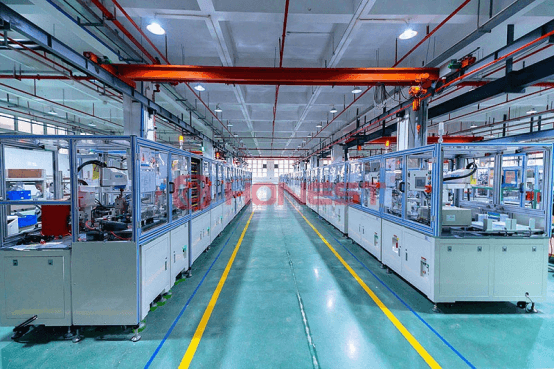
Therefore, higher-priced equipment suppliers continue to win customers not because buyers simply “have bigger budgets,” but because they offer the reliability, professional support, and long-term cost advantages that low-cost solutions often cannot provide.
So, after understanding the reasons behind low-price competition and the value of higher-quality suppliers, how should motor manufacturers choose the right motor equipment supplier?
The following five criteria can help you make a more accurate evaluation when comparing different equipment manufacturers.
1) Technical Expertise: Does the Supplier Truly Master the Core Technologies?
Key Evaluation Points:
· What is the supplier’s original core business and technical background?
· Does the company have complete in-house teams for mechanical design, electrical control, and software development?
· The number of invention patents related to core manufacturing processes can be an important indicator of technical capability and engineering experience.
2) Industry Experience: Does the Supplier Have Proven Experience With Similar Motor Projects?
Key Evaluation Points:
· Request successful project cases involving similar motor types, including comparable power ranges, manufacturing processes, and application scenarios.
· Prioritize suppliers with production lines that have been operating stably for more than one year after delivery.
· If possible, visit reference factories or communicate directly with existing customers for verification.
3) Solution Capability: Can the Supplier Provide a Complete Intelligent Production Line Solution?
Key Evaluation Points:
· Can the supplier provide a complete solution covering stator and rotor assembly, final motor assembly, testing, and packaging?
· Does the equipment support MES integration, data collection, process traceability, and remote maintenance functions?
· How long does product changeover take? Can the production line support multiple motor models within the same factory?
4) Validation Process: Does the Supplier Support Material Trial Runs?
Key Evaluation Points:
· Does the supplier provide trial production testing using customer materials?
· After the trial run, can the supplier provide formal reports including cycle time, yield rate, CPK values, and other key production data?
· Are the customer’s engineers allowed to participate throughout the testing and commissioning process?
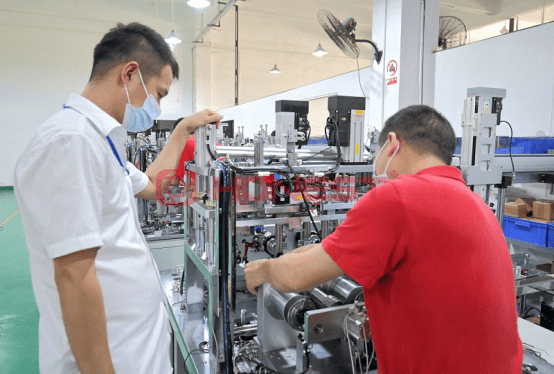
5) Service Capability: Does the After-Sales Support Truly Solve Problems?
Key Evaluation Points:
· How long is the warranty period? Are extended warranties available for core components?
· Does the supplier have local service support? What is the response time for remote troubleshooting and technical support?
· Does the supplier provide complete training for operation, programming, and maintenance?
In addition to the five criteria above, there are two contract details that are often overlooked during equipment procurement but can lead to significant losses if not clearly defined.
First, the product changeover solution must be clearly specified. The contract should define the changeover method between different motor models, required changeover time, whether fixture replacement is needed, and which party is responsible for fixture-related costs.
Second, the acceptance criteria must be measurable and specific. Avoid vague descriptions such as “equipment operates normally” or “meets production requirements.” Instead, the contract should clearly define key acceptance indicators, including cycle time (seconds per unit), yield rate (%), CPK value (≥1.33), and the detailed acceptance process, including pre-acceptance and final acceptance procedures.
Choosing a motor assembly line supplier is never simply a price decision — it is a value decision. While low-cost solutions may reduce initial procurement expenses, the losses caused by insufficient precision, frequent equipment failures, and inadequate after-sales support often far exceed the original savings through production downtime and quality-related costs.
In contrast, suppliers with strong technical expertise, proven industry experience, complete solution capabilities, standardized validation processes, and reliable service support may not offer the lowest quotation, but they provide something far more valuable: reliability and long-term stability.
As a company focused on the development and manufacturing of intelligent motor automation equipment, HONEST Automation started with the independent development of motor winding machines and has continuously expanded toward intelligent manufacturing solutions for new energy vehicle motors, humanoid robot motors, brushed and brushless motors, and other advanced applications.
HONEST Automation remains committed to technology-driven development and reliable project delivery.
If you are looking for a reliable partner for your next motor automation production line project, you are welcome to connect with HONEST Automation. You can schedule an online meeting with HONEST technical team or visit our factory to learn more about our industry experience, similar project cases, technical capabilities, and long-term cooperation value.