The transition to the hairpin motor is the most critical evolution in modern EV drivetrain manufacturing. While the performance benefits—higher power density and superior thermal management—are undeniable, the manufacturing process is notoriously unforgiving. Unlike traditional round-wire winding, hairpin production involves a rigid sequence of high-precision operations.
Today, the greatest challenge for motor manufacturers isn’t finding a machine to bend wire or weld pins; it is seamlessly connecting these isolated steps. Sourcing standalone equipment often leads to disastrous integration bottlenecks. That’s why the industry is shifting toward end-to-end partners. A true turnkey hairpin motor automation supplier takes full responsibility from hairpin winding to final motor assembly, eliminating integration risks and ensuring mass-production viability.
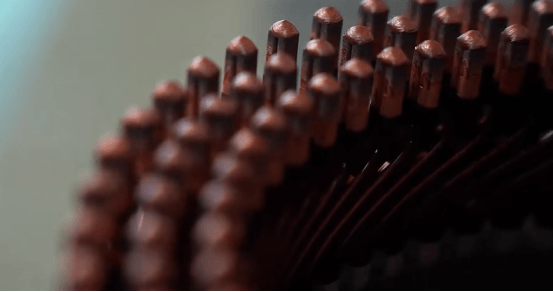
Here is why a turnkey approach is essential and how to identify the right integration partner for your facility.
The Integration Trap: Why Standalone Machines Fail Hairpin Production
When building a new hairpin motor line, the instinct for many procurement teams is to cherry-pick the “best” standalone machine for each process—buying a former from one vendor, an inserter from another, and a welder from a third. This approach often creates an integration trap that cripples production efficiency.
Buffer Overflow & Bottlenecks: Standalone machines operate at independent speeds. If your winding machine cycles faster than your laser welder, work-in-progress (WIP) accumulates, causing buffer overflows and forcing faster machines to idle.
Data Silos in Automation: When machines speak different PLC languages, you lose the ability to trace defects back to their origin. A welding defect might actually be caused by a micro-misalignment during insertion, but without a unified data thread, root-cause analysis becomes impossible.
Vendor Blame-Shifting: When a stator fails the Hi-Pot test, the insertion machine supplier blames the insulation paper, the paper supplier blames the insertion force, and the welding supplier blames the twisting. This lack of single-source accountability stalls production for weeks.
The Anatomy of a Turnkey Hairpin Motor Line: Beyond Just Winding
A reliable turnkey supplier doesn’t just connect machines; they engineer a synchronized ecosystem. To understand the depth of integration required, let’s break down the anatomy of a complete hairpin motor production line.
Stage 1: Precision Forming & Insertion
The line begins with the manipulation of the flat wire itself. This involves wire straightening, lacquer stripping, and highly precise U-Pin or X-Pin bending. The formed hairpins are then inserted into the stator core. A turnkey supplier ensures the transition from the forming die to the insertion tooling is seamless, utilizing “zero-damage” insertion technologies to prevent scratching the wire insulation, which is a leading cause of HV failure.
Stage 2: Twisting & Laser Welding
This is the yield-determining stage of the line. After insertion, the pin ends must be twisted (turked) to establish electrical contact and then laser-welded. A turnkey integrator synchronizes the twisting force with the welding parameters. By utilizing vision systems for coaxiality alignment before the laser fires, integrated lines guarantee consistent weld penetration and minimal spatter, ensuring ultra-low joint resistance.
Stage 3: Impregnation & Testing
To secure the windings and enhance thermal conductivity, the stator undergoes vacuum pressure impregnation (VPI) or trickle impregnation. Following this, End-of-Line (EOL) testing—including Hi-Pot, surge testing, and resistance checks—validates the stator. In a turnkey line, this testing data is instantly fed back to the earlier forming stations for real-time process adjustment.
Stage 4: Stator to Rotor & Final Assembly
The final leap is transforming a finished stator into a complete EV motor. This requires high-precision press-fitting of the rotor into the stator, installation of bearings, and final housing assembly. This is where many single-process vendors drop off. A true end-to-end partner synchronizes the stator delivery pace directly with the final motor assembly line, ensuring balanced cycle times from wire to drivable motor.
The “Turnkey” Advantage: 3 Reasons to Choose End-to-End Suppliers
Choosing a turnkey flat wire motor automation supplier provides strategic advantages that directly impact your bottom line:
1. Guaranteed Cycle Time (OEE): A single supplier designs the entire line to meet a specific Overall Equipment Effectiveness (OEE) and Cycle Time (CT). They manage the buffer sizes and station parallelization, guaranteeing the final output rate—something impossible when buying standalone machines.
2. Single Point of Accountability: If the line stops, there is only one phone number to call. The supplier cannot blame a sub-vendor; they own the problem and the solution, drastically reducing downtime.
3. Seamless Digital Thread: From the first wire cut to the final motor NVH test, a unified MES (Manufacturing Execution System) tracks every serial number. This provides 100% traceability, essential for automotive compliance.
How to Vet a Supplier’s True Turnkey Capabilities
Many equipment vendors claim to be turnkey suppliers, but in reality, they merely act as brokers—buying missing machines from third parties and assembling them on your floor. To distinguish true integrators from assemblers, ask these critical questions:
Where is your core technology developed? Look for suppliers who design their own critical tooling, such as twisting heads or laser welding optics, in-house. HONEST Automation, for example, relies on proprietary core technologies rather than off-the-shelf components, ensuring deep process understanding.
Do you offer virtual commissioning? Advanced turnkey suppliers simulate the entire line digitally before building it physically. This drastically reduces on-site debugging time from months to weeks.
Who manages the software? Ensure the supplier uses a unified control architecture and a single MES system, rather than patching together different third-party HMI panels.
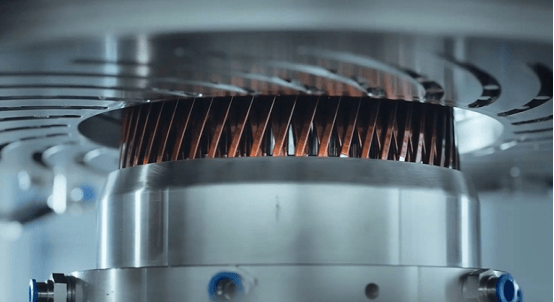
HONEST Automation: Your End-to-End Partner from Wire to Motor
As a proven turnkey hairpin motor automation supplier, HONEST Automation delivers fully synchronized production lines from flat wire winding to EV motor assembly. By controlling the entire process architecture—from precision X-pin forming to laser welding and final rotor-stator mating—we ensure cycle times under [e.g., 45 seconds], yields exceeding 98%, and single-source accountability for your factory floor.
In the high-stakes world of EV motor manufacturing, the integration risk of standalone equipment is too great to bear. From hairpin winding to final motor assembly, a turnkey approach is no longer a luxury; it is a strategic necessity to guarantee yield, protect OEE, and accelerate your time-to-market.
To explore how an end-to-end integration strategy can de-risk your next production line, contact HONEST Automation's online consultation for a customized whole-line proposal.
Frequently Asked Questions (FAQ)
Q1: What exactly is a turnkey hairpin motor production line?
A1: A turnkey line is a fully integrated automation solution where a single supplier designs, manufactures, and commissions the entire process—from flat wire forming and winding to final EV motor assembly. The supplier takes full responsibility for the overall cycle time (CT), yield rate, and seamless operation, delivering a “ready-to-run” factory line.
Q2: Why is turnkey integration better than buying standalone winding and assembly machines?
A2: Turnkey integration eliminates the synchronization bottlenecks between different process steps (e.g., winding vs. welding). It ensures seamless data tracing via a unified control system and provides a single point of accountability for after-sales support, avoiding the common “vendor blame-shifting” that occurs when machines are sourced separately.
Q3: How do turnkey suppliers handle data integration and traceability across the line?
A3: Top-tier turnkey suppliers implement a unified MES (Manufacturing Execution System) that communicates with all PLCs across the line. For instance, HONEST Automation integrates a seamless digital thread that records process parameters—like laser welding depth or twisting torque—linking every motor’s serial number to its specific manufacturing data for complete lifecycle traceability.
Q4: What is the typical lead time for a custom turnkey flat wire motor assembly line?
A4: Depending on the complexity, level of automation, and specific motor design, lead times generally range from 5 to 9 months. However, suppliers with strong project management and virtual commissioning capabilities, like HONEST Automation, can often compress this timeline.
Q5: Can a turnkey supplier upgrade or modify an existing round-wire line to handle flat wire (hairpin) technology?
A5: While it’s technically possible to reuse some peripheral equipment (like conveyors or testing stations), the core processes (forming, insertion, twisting, and welding) are fundamentally different. A specialized turnkey supplier will usually recommend a purpose-built hairpin line to ensure the structural rigidity and precision required for flat wire, avoiding compromised cycle times.
Q6: How do suppliers ensure the cycle time (CT) matches the promised output for high-volume EV production?
A6: Reputable turnkey suppliers guarantee OEE (Overall Equipment Effectiveness) through synchronous whole-line design. This involves precise buffer management between stations and virtual commissioning to identify and eliminate bottlenecks before the line hits the factory floor, ensuring consistent high-volume throughput.
Q7: Can a turnkey flat wire motor line handle both I-Pin and X-Pin configurations?
A7: Yes. Advanced turnkey suppliers like HONEST Automation design modular end-to-end lines that can be configured for both I-Pin and X-Pin processes. This modular approach protects your capital investment, allowing quick changeovers to adapt to evolving EV motor designs.