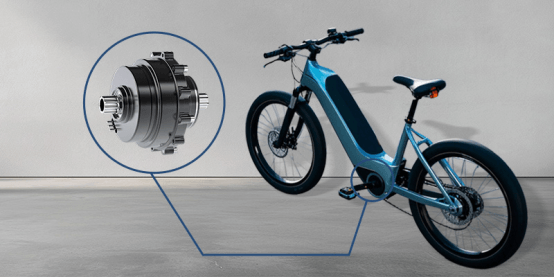
The global E-Bike market is undergoing a rapid premiumization. While hub motors dominated the early waves of electrification, demanding riders and high-performance applications are shifting toward mid-drive systems. By positioning the motor at the bottom bracket, mid-drive units lower the center of gravity, leverage the bike’s existing drivetrain for optimal gear ratios, and deliver a far more natural riding experience.
However, this superior performance comes with significant manufacturing complexity. A mid-drive system is not just a motor; it is a highly integrated drive unit comprising the motor, planetary gearbox, clutch, torque sensor, and controller. Sourcing the right assembly line manufacturer is the most critical decision an e-bike OEM faces when transitioning from prototype to mass production.
Why Mid-Drive Motor Assembly is Uniquely Complex
Unlike the relatively simple assembly of hub motors, mid-drive drive units require the precise integration of mechanical and electrical systems within an extremely compact, lightweight housing. According to industry experts, there are three core challenges:
Mechatronics Integration Challenges: Combining a high-speed electric motor with a precision planetary gearbox in a confined space requires microscopic alignment tolerances. Any misalignment directly translates to friction, heat, and efficiency loss.
The Clutch & Torque Sensor Bottleneck: The seamless transition between human pedaling and motor assist relies on the clutch and torque sensor. These components require ultra-precise assembly to ensure zero-lag engagement and disengagement. A slight deviation in assembly can cause the dreaded “lag” or “surge” that ruins the riding experience.
Sealing and NVH Requirements: Mid-drive units are exposed to harsh outdoor elements, demanding IP67-level sealing against water and mud ingress. Simultaneously, the close proximity of high-RPM motors and gear trains makes Noise, Vibration, and Harshness (NVH) control a critical assembly parameter.
Key Processes in a Mid-Drive Drive Unit Assembly Line
To achieve high yield and consistent quality, a mid-drive assembly line must be engineered around a sequence of highly controlled, data-traceable processes. A comprehensive production line typically encompasses the following core stations:
1. Rotor & Stator Assembly
Depending on the motor topology (concentric winding or hairpin/flat-wire), this stage involves precision winding, magnet insertion, and stator-rotor mating, ensuring strict control of the air gap.
2. Planetary Gearbox Assembly
This is the mechanical heart of the mid-drive unit. It requires the precise insertion and meshing of the sun gear, planetary gears, and ring gear. Automated vision-guided pressing and selective assembly techniques are often required to minimize gear backlash.
3. Clutch & One-Way Bearing Integration
The clutch mechanism must be assembled with exact axial and radial positioning. Proper preloading of the one-way bearing is essential to ensure instant torque transmission without slippage.
4. Controller & Sensor Integration
This station handles the insertion of the inverter PCB, the mating of high-current busbars, and the delicate installation of the torque sensor, often requiring cleanroom-adjacent ESD (Electrostatic Discharge) control.
5. Potting, Sealing & Final Closure
To achieve IP67 ratings and enhance thermal conductivity, automated dispensing systems apply precise beads of potting compound and sealant. The final enclosure is then torqued down using multi-spindle tighteners with angle and torque monitoring.
6. End-of-Line (EOL) Testing
Perhaps the most critical station. The EOL test bench performs dielectric withstand tests, insulation checks, NVH acoustic profiling, and dynamic torque curve calibration under simulated loads. No mid-drive unit should leave the factory without rigorous EOL validation.
Sourcing an Assembly Line: Evaluating the Right Manufacturer
Selecting an assembly line manufacturer is not merely a procurement exercise; it is choosing a process engineering partner. OEMs must evaluate suppliers across critical dimensions:
Evaluation Dimension | General System Integrator | Process-Driven Turnkey Manufacturer |
Process Depth | Relies on 3rd-party sub-assemblies; struggles with gear meshing or NVH root-cause analysis. | Possesses in-house mechatronics expertise to solve assembly-induced defects at the source. |
Line Balancing | Unbalanced takt times between stations leading to bottlenecks. | Engineered for synchronized throughput from station 1 to EOL. |
EOL Capability | Basic pass/fail electrical testing. | Advanced dynamic torque mapping and acoustic NVH analysis. |
Changeover Flexibility | Heavy tooling changes required for new motor variants. | Servo-driven, modular fixtures allowing rapid changeover for different platforms (e.g., MTB vs. Gravel). |
The Advantage of End-to-End Turnkey Partners
A common pitfall in scaling mid-drive production is sourcing individual stations from disparate vendors—an automatic press from one supplier, a robot from another, and a test bench from a third. This fragmented approach forces the OEM to act as the system integrator, leading to interface mismatches, unbalanced takt times, and a fractured accountability structure when line yield drops.
Overcoming the intricate assembly challenges of mid-drive motors—from precise planetary gear meshing to reliable EOL validation—demands more than fragmented equipment. It requires integrated solutions. HONEST Automation specializes in providing the equipment solutions that bridge the gap between complex engineering and mass production. Rather than offering isolated machines, HONEST Automation delivers comprehensive, turnkey mid-drive motor and drive unit assembly lines.
Whether an OEM needs standalone precision equipment for rotor and stator assembly, automated planetary gearbox assembly stations, or sophisticated EOL test benches, HONEST integrates these core processes into a seamless, high-throughput system. By engineering the entire workflow, HONEST Automation helps e-bike manufacturers resolve mechatronics integration challenges, eliminate bottlenecks, and achieve scalable, high-yield mass production of their mid-drive units.
Customer Case: Mid-Drive Motor Assembly Line – Overcoming Magnet Assembly and Stator Winding Challenges to Deliver Customer-Compliant Products
In the assembly of mid-drive motors for E-bikes, the customer faced two major technical challenges. First, the magnets inside the motor were rectangular and varied in shape, with strong magnetic fields, making assembly extremely difficult. Second, the stator section required the assembly of as many as 208 magnets. During automated assembly, an inner support core was needed, which later had to be removed, followed by inspection of the outer diameter and magnetic pole distribution. Additionally, the winding used flat wire instead of conventional round copper wire, requiring manual splicing after winding.
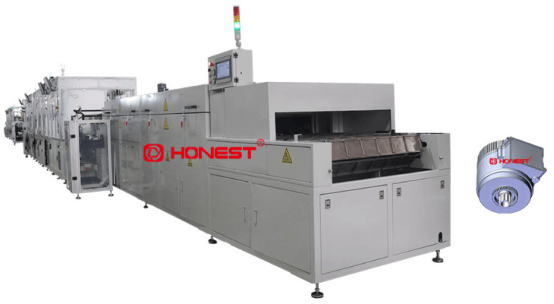
Despite the complexity of these processes—virtually without precedent—Honest Automation succeeded in fully automated assembly without any trial sampling. This was made possible by the strength of Honest Automation's engineering team. Led by the Technical Director, the design team overcame the challenges of magnet assembly, dispensing, and fixation. By combining automated equipment with manually assisted stations, the entire production line achieved rapid and smooth debugging and validation.
In the end, Honest Automation delivered a complete mid-drive motor assembly line consisting of 29 machines, requiring only 12 operators across the entire line. The line consistently achieves a yield rate exceeding 98% and an assembly takt time of 72 seconds per finished motor. This case fully demonstrates Honest Automation's technical expertise and engineering capability in the field of high-difficulty motor assembly.
Future Trends in E-Bike Drive Unit Automation
The next generation of mid-drive assembly lines is being shaped by intelligent data and tighter integration:
AI-Driven EOL Diagnostics: Advanced acoustic sensors combined with AI algorithms can instantly identify microscopic gear defects or bearing anomalies by analyzing the sound frequency during the EOL run-in phase, well before they become field failures.
Digital Twin & Full Traceability: European and North American regulations are demanding stricter component traceability. Future lines will utilize digital twins to simulate process changes, alongside laser marking and cloud-based data logging for full lifecycle traceability from screw to finished drive unit.
Compact, Modular Cell Designs: As e-bike platforms proliferate, assembly lines are moving away from rigid linear transfers toward flexible, modular cells that can be quickly reconfigured for multi-platform variants.
Partnering for Precision and Scale
The market dominance of mid-drive e-bikes is undeniable, but their manufacturing complexity demands a new level of automation sophistication. Success in this space requires more than just assembling parts; it requires mastering the interplay between precision gear mechanics and high-speed electromagnetics.
For e-bike OEMs and Tier 1 suppliers, choosing an assembly line manufacturer with deep process know-how, end-to-end integration capabilities, and advanced EOL testing proficiency is the key to scaling production while maintaining the premium ride quality customers demand.
Ready to optimize your mid-drive motor mass production? Contact HONEST Automation today to explore our turnkey assembly line solutions and discover how we can help you overcome your most complex drive unit manufacturing challenges.