The transition of humanoid robots from laboratory prototypes to commercial mass production is heavily dependent on advanced manufacturing technologies. As companies like Tesla, Figure, and Agility Robotics scale up production, the demand for specialized, high-throughput manufacturing systems has surged. Supplying humanoid robot production lines requires a deep understanding of precision engineering, particularly in actuator manufacturing and flexible assembly. This article explores the key global automation providers powering the humanoid robot manufacturing revolution.
The Core Bottlenecks in Humanoid Robot Mass Production
Mass-producing humanoid robots is vastly different from traditional industrial robotics or consumer electronics. The primary challenges lie in the complexity of the mechanical structure and the need for extreme reliability.
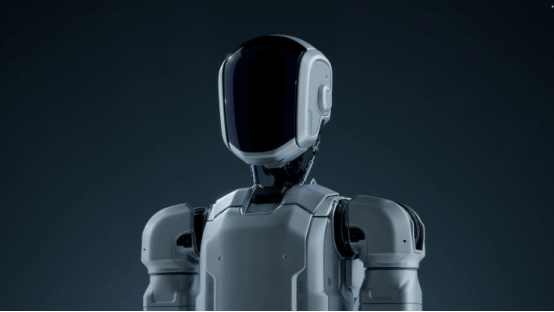
High-Precision Actuator Manufacturing
A single humanoid robot requires over 40 high-performance joint actuators. These actuators—primarily utilizing frameless torque motors, hollow cup motors, and planetary/harmonic reducers—account for over 60% of the robot’s total hardware cost and manufacturing complexity. Achieving micro-meter level tolerances in stator and rotor assembly is non-negotiable for smooth articulation.
Flexible Assembly Requirements
Unlike automotive assembly lines that produce identical units, humanoid robot production lines must accommodate rapid design iterations. Manufacturing systems require modular designs that can handle multi-variety, small-batch, and scalable production without extensive downtime for retooling.
The Heart of Mobility: Joint Motor Automation Lines
Before a humanoid robot can walk, its “muscles”—the joint motors—must be manufactured with absolute precision. Therefore, joint motor automation lines are the most critical foundation of the humanoid robot supply chain.
Specialized motor automation equipment providers are tasked with delivering turnkey solutions for frameless torque motors and hollow cup motors. These automated lines integrate highly complex processes:
Precision Stator Winding and Insertion: Ensuring high copper fill factors for optimal torque density.
Automatic Magnet Insertion and Magnetization: Handling high-strength rare-earth magnets safely and precisely.
Micro-Meter Level Rotor-Stator Assembly: Achieving tight air gaps while preventing friction, which directly impacts motor efficiency and heat generation.
Comprehensive EOL (End-of-Line) Testing: Validating torque ripple, back-EMF, and thermal performance.
By driving down the per-unit cost of actuators and achieving yield rates exceeding 99%, specialized motor automation lines directly dictate the commercial viability of humanoid robots.
Key Global Automation Providers for Humanoid Robot Production
The supply chain for humanoid robot production lines is highly specialized, segmented into component-level equipment providers, system integrators, and global robotics giants. Below is an overview of the key global automation providers facilitating this industry.
1. Component-Level Automation Specialists (Motor & Actuator Manufacturing)
These companies provide the critical upstream manufacturing equipment required to build the core components of humanoid robots.
HONEST Automation: A leading expert in turnkey automated production lines for electric motors, HONEST Automation provides high-precision stator winding, rotor assembly, and magnet insertion solutions specifically tailored for humanoid robot joint motors. With deep expertise in frameless torque motor manufacturing, their equipment ensures the micro-meter precision and high yield rates required for next-generation actuators.
Aumann AG: A prominent German manufacturer specializing in winding technology and automated production lines. Aumann is highly regarded for its solutions in electric mobility and specialized motors, making it a key equipment supplier for high-speed rotors and stators used in advanced robotics.
EDAG Group: Provides comprehensive production equipment solutions for e-motors and transmissions, heavily applicable to the reducer and actuator assembly processes required in humanoid joints.
2. Industrial Robot & Integration Giants
These providers supply the standard robotic arms and complex integration services necessary to assemble the thousands of components into a functional humanoid robot.
FANUC / KUKA / ABB: These global industrial robot giants supply the foundational automation hardware—such as 6-axis robots, SCARA robots, and collaborative robots (cobots)—used on the final assembly lines. They provide the “robots that build robots,” handling heavy lifting, precise fastening, and material handling.
Bosch Manufacturing Solutions (Bosch Rexroth): Leveraging decades of experience in automotive mass production, Bosch provides highly scalable, data-driven assembly line integration. Their expertise in automated guided vehicles (AGVs) and connected manufacturing execution systems (MES) is crucial for scaling humanoid production.
3. Emerging Humanoid-Specific Automation Tech
A new wave of automation providers is focusing specifically on the unique challenges of humanoid assembly, such as tendon routing and multi-axis calibration.
Flex (formerly Flextronics): As a global contract manufacturer, Flex is increasingly offering “skunkworks” production lines for robotic startups, providing everything from supply chain management to final box-build assembly for humanoid prototypes and early commercial batches.
Nordson Precision Dispensing: Essential for humanoid manufacturing, Nordson provides automated fluid dispensing systems used for structural adhesives, potting for motor controllers, and thermal management materials within the robot’s compact chassis.

What Defines a High-Quality Humanoid Robot Production Line?
Not all automation is created equal. For a production line to effectively support humanoid robots, it must meet several rigorous standards:
Uncompromising Precision and Yield Rate: In joint motor manufacturing, maintaining a consistent air gap between the stator and rotor is vital. High-quality lines maintain tolerances within ±5 micrometers, ensuring minimal torque ripple.
Digital Twin and MES Integration: Modern production lines must be virtual first. Digital twin technology allows engineers to simulate the assembly process before physical deployment, while MES integration ensures full traceability of every component, from the magnet lot to the final torque test.
Scalability (PPR Flexibility): The line must be capable of handling low-volume prototype runs (e.g., 10 units per run) and seamlessly scaling to high-volume mass production (thousands of units per month) without requiring a complete line overhaul.
Future Trends in Humanoid Automation
The next phase of humanoid robot manufacturing will be defined by deeper AI integration. AI-driven computer vision will replace traditional quality control, dynamically identifying microscopic defects in motor windings or gear meshing. Furthermore, we will see a trend toward “supply chain localization,” where regional automation providers are contracted to build production lines closer to the final assembly points to mitigate geopolitical risks and shipping costs for heavy equipment.
Conclusion & Expert Insight
The era of commercial humanoid robots is arriving, but it cannot be realized without the unsung heroes of the supply chain: the automation equipment providers. From global integrators providing assembly platforms to specialized motor automation experts like HONEST Automation, crafting the precision joint motor production lines, these providers are the true enablers of the humanoid revolution. Choosing an automation partner that deeply understands the nuances of actuator manufacturing will be the deciding factor in who dominates the robotics market of tomorrow.