The Power Core That Defines Flight Performance
In the unfolding story of the low‑altitude economy, drones are the undisputed protagonists, and their motors are the beating heart. As the core of the propulsion system, the motor converts electrical energy into mechanical energy to spin the propellers, generating lift and thrust for take‑off, hovering, cruising, and landing. The motor’s power density, efficiency, and reliability directly dictate overall flight performance and endurance.
HONEST Automation understands this industrial logic deeply – we focus not only on the technological evolution of motors themselves, but also on providing the robust intelligent equipment needed to scale up the production of high‑performance drone motors with consistent quality.
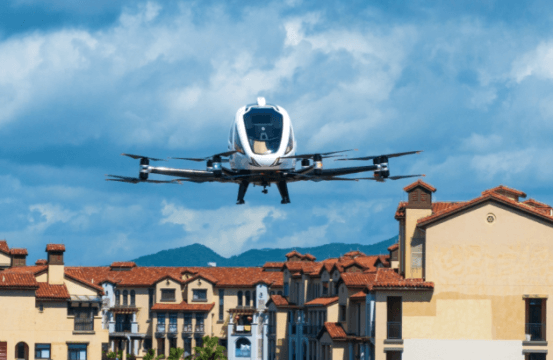
Technology Landscape of Drone Motors
Today’s drone motors have settled into a clear pattern: Brushless DC (BLDC) motors dominate the mainstream, while coreless and servo motors serve specialised niches.
Brushed DC motors – rely on mechanical commutation; simple and low‑cost, but suffer from low efficiency and short lifespan due to brush wear. They are now found only in miniature toy drones.
Brushless DC motors (BLDC) – consist of a permanent‑magnet rotor, a multi‑phase wound stator, and an electronic speed controller (ESC) for electronic commutation. Their advantages are compelling: high efficiency, long life, low heat generation, high power density, and virtually maintenance‑free. These traits make BLDC the absolute standard for consumer, industrial, and racing drones.
Coreless motors – feature an iron‑less rotor design, achieving energy conversion efficiencies often above 70% and in some cases over 90%, with extremely fast response. They are widely used in model aircraft and lightweight drones where weight minimisation is critical.
Servo motors – integrate the motor, driver, and encoder into a compact unit, offering high precision and fast response. They are primarily employed in tethered drones and gimbal control systems for precise attitude adjustment and stable camera footage.
Key Selection Parameters: From Technical Specs to Manufacturing Challenges
Understanding the critical parameters is essential for motor selection, and equally, they define the manufacturing difficulty:
KV rating – indicates the no‑load speed per volt (RPM/V). A low‑KV motor pairs with large propellers to deliver high torque, ideal for long‑endurance and heavy‑lift drones. A high‑KV motor works with small propellers for high‑speed, burst‑oriented applications like racing.
Size designation – expressed as a four‑digit number (e.g., 2205, 2306): the first two digits are the stator diameter (mm), the last two are the stator stack height (mm). Generally, larger sizes provide more torque and power but add weight and increase winding complexity.
Power and efficiency – determined by voltage, current, and load matching. High‑efficiency motors significantly extend flight time, which relies on precise winding tension, high‑grade permanent magnets, and tight air‑gap control.
Different application scenarios impose distinct requirements: consumer drones prioritise low noise and high energy efficiency; racing drones demand instant burst power; agricultural drones need high torque to drive large propellers for greater payload and wind resistance. Ultimately, achieving all these performance goals depends on manufacturing precision and consistency.
Common Failure Modes and Manufacturing Countermeasures
In operation, motors may encounter issues that often trace back to production quality:
Overheating – caused by overloading, KV/load mismatch, poor cooling, or insufficient thermal management.
Excessive vibration – typically due to bent motor shafts or propeller imbalance.
Start up difficulties – often linked to ESC calibration or communication protocol mismatches.
HONEST Automation’s approach – through high‑precision winding machines, automated assembly lines, and intelligent vision inspection systems, we ensure that every motor meets stringent standards for winding tension, magnet positioning, dynamic balancing, and electrical parameter testing – fundamentally reducing failure risks right from the manufacturing stage.
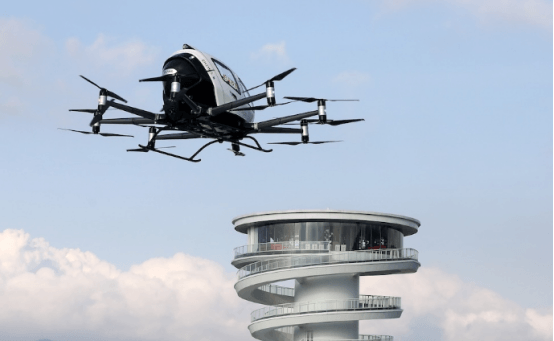
HONEST Automation: Enabling Intelligent Production of Drone Motors
Selecting the right drone motor involves balancing airframe design, payload, endurance, and mission profile. BLDC motors have become the industry standard thanks to their proven reliability. But realising a high‑performance design requires high‑precision, high efficiency manufacturing capabilities.
HONEST Automation, a national “Little Giant” enterprise with 19 years of experience in motor automation equipment, has extended its expertise from the new‑energy vehicle sector to the drone motor market. We deliver end‑to‑end digital and intelligent solutions covering winding, assembly, and testing:
Intelligent vision inspection systems – enable 100% inline testing of critical parameters such as rotor balance, winding resistance, and dielectric strength.
Flexible assembly platforms – can quickly switch between different motor size specifications to accommodate various production needs.
As the low altitude economy takes off, the scalable production of high‑performance motors becomes the essential foundation. HONEST Automation leverages its advanced intelligent equipment to help drone motor manufacturers bridge the gap between sophisticated design and reliable mass production – together driving the trillion‑yuan blue‑sky market forward.
If you require prototyping or mass production for eVTOL drone motors, you are welcome to contact us online or leave a message to get a customized solution and a quotation.