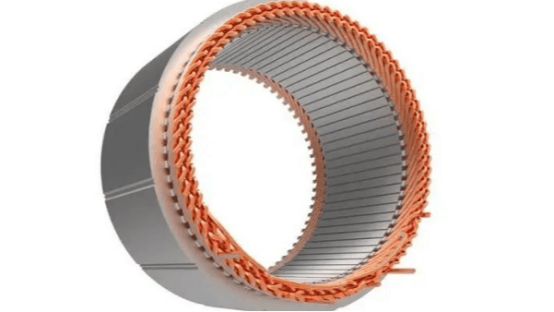
The electric vehicle (EV) revolution is fundamentally reshaping the automotive powertrain landscape. At the heart of this transformation is the shift from traditional round-wire stators to hairpin (flat-wire) technology. Driven by superior copper fill factors, enhanced thermal performance, and higher power density, hairpin motor are rapidly becoming the industry standard. Industry projections indicate that flat-wire motor penetration in new energy vehicles will exceed 60% by 2028.
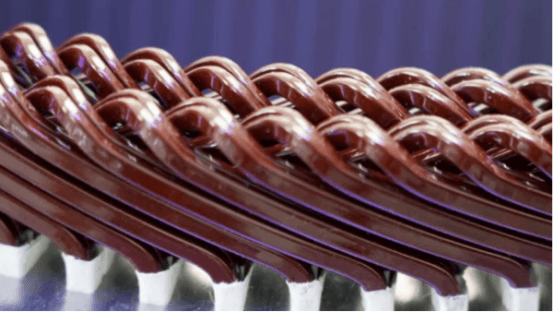
However, the performance benefits of hairpin motor come at a cost: manufacturing complexity. Transitioning from round-wire winding to hairpin insertion requires a complete paradigm shift in production methodology. For automotive OEMs and tier-one suppliers, sourcing hairpin motor equipment is not merely a procurement exercise—it is a strategic decision. Finding the right automation partner dictates your yield rates, scalability, and ultimately, your market competitiveness.
Why Hairpin Motor Manufacturing Demands Specialized Automation
Unlike the relatively forgiving nature of random winding, hairpin stator production is an intricate, multi-stage process where a single micro-error can scrap an entire stator. frequently highlight the following three manufacturing bottlenecks as the primary reasons generic automation fails in this field:
Precision Bending & Forming Challenges
Hairpin wires require complex 2D and 3D bending with strict tolerances. A slight deviation in bending radius or angle can lead to insertion failures or short circuits at the stator core. Automation must maintain sub-millimeter consistency across millions of cycles, demanding specialized servo-driven bending heads and precision tooling that compensates for material spring-back.
The Critical Nature of Insertion & Twisting
Inserting rigid flat wires into the narrow slots of a stator core—especially for 4-layer, 6-layer, or 8-layer configurations—requires exact alignment. The automation equipment must control insertion speed and force perfectly to prevent damage to the wire’s delicate insulation layer. Subsequently, the twisting process must apply uniform torque to ensure structural integrity without inducing micro-cracks.
Welding Consistency for High Conductivity
The removal of the insulation layer (stripping) and the subsequent laser welding of hundreds of hairpin ends represent the ultimate yield gatekeeper. Inconsistent welding leads to high contact resistance, localized overheating, and eventual motor failure. Automation partners must deliver systems capable of real-time weld monitoring to eliminate porosity and ensure structural and electrical integrity.
Key Evaluation Criteria: How to Assess an Automation Partner
When evaluating hairpin motor equipment suppliers, technical specifications on a brochure are insufficient. The assessment must focus on the partner’s ability to integrate these technologies into a cohesive, high-yield production line.
Evaluation Dimension | Key Metrics to Assess | Critical Questions for the Supplier |
Integration Breadth | End-to-end capability, Takt time balance | Can they deliver from wire forming to final weld, or only isolated stations? |
Process Know-How | In-house lab, PFMEA documentation | Can they prove their process before you buy the machine? |
Flexibility | Changeover time, Multi-layer compatibility | How long to switch between different stator diameters or 4L/6L configurations? |
Global Support | Local service teams, MTTR (Mean Time to Repair) | What is the SLA for spare parts and remote diagnostics? |
1. Technological Depth vs. Integration Breadth
Many suppliers excel at isolated processes—such as a high-speed bending machine—but lack the expertise to integrate forming, insertion, twisting, and welding into a balanced line. A true automation partner understands the “Takt Time Balance.” If the bending machine operates at 15 seconds per piece, but the welding station takes 25 seconds, the entire line is bottlenecked. Look for partners who engineer the entire workflow, not just single stations.
2. Proprietary Process Know-How
A reliable equipment partner should function as a process R&D lab, not just a machine builder. Before capital expenditure, they should provide a comprehensive Process Failure Mode and Effects Analysis (PFMEA) and prove out new stator designs using their in-house prototype equipment. In hairpin automation, the true ROI is determined by first-pass yield (FPY) and mean time between failures (MTBF), rather than the initial capital expenditure.
3. Tolerance for High-Mix Variants (Flexibility)
As motor designs evolve rapidly, rigid automation is a liability. The right equipment must feature modular tooling and servo-adjustable mechanisms to handle varying stator outer diameters, slot counts, and layer configurations. Evaluate the changeover time: a best-in-class partner can switch stator variants in under 30 minutes, whereas legacy systems may require hours of manual recalibration.
4. Global Service & Lifecycle Support
A downtime event on a hairpin production line can halt an entire vehicle assembly plant. For global OEMs, localized technical support is non-negotiable. Evaluate the supplier’s global footprint, their stock of critical spare parts, and their capability for remote diagnostic intervention.
Red Flags in the Sourcing Process: What to Avoid
When sourcing hairpin equipment, certain red flags indicate a high risk of project failure:
Prioritizing Machine Price over Total Cost of Ownership (TCO): A cheaper bending machine that causes a 5% drop in FPY at the welding stage will cost millions in scrapped stators over a year’s production run.
Lack of Automotive System Certification: If the equipment supplier cannot demonstrate compliance with IATF 16949 or provide PPAP (Production Part Approval Process) documentation, they are not prepared for the rigor of automotive manufacturing.
Absence of Client Witness Testing: If a supplier refuses to conduct a comprehensive Factory Acceptance Test (FAT) using your specific wire and lamination designs under production-like conditions, proceed with extreme caution.
A Step-by-Step Framework for Sourcing Hairpin Equipment
To mitigate risk and ensure alignment with a capable partner, follow this structured sourcing framework:
Step 1: Define Technical Specifications & Cycle Time (Takt Time)
Clearly document your current and future stator designs, target cycle times (e.g., <30s per stator), and acceptable yield thresholds.
Step 2: Conduct Feasibility Studies & Sample Validation (POC)
Send your wire and lamination samples to the equipment partner. Request video evidence or on-site validation of the forming, insertion, and welding processes. Verify the cross-sectional weld quality under a microscope.
Step 3: Evaluate Supplier’s R&D Infrastructure & In-house Tooling
Audit their manufacturing facility. Do they machine their own precision tooling, or do they outsource critical components? In-house tooling ensures faster iteration and tighter quality control.
Step 4: Audit Manufacturing Facilities & Quality Control Systems
Verify their calibration standards, traceability systems, and weld monitoring capabilities (e.g., OCT/plasma monitoring).
Step 5: Negotiate Service Level Agreements (SLAs) & Spare Part Guarantees
Secure contractual guarantees on MTTR (Mean Time to Repair) and ensure a guaranteed supply chain for wear-and-tear parts like bending dies and stripping blades.
The Future of Hairpin Automation: What’s Next
The next generation of hairpin automation is defined by intelligent adaptability rather than mere mechanical speed.
Predictive Maintenance
Modern automation lines are being equipped with sensors that monitor the wear of bending dies and the focal point of welding lasers. The system can predict tooling failure before it occurs, scheduling maintenance during planned downtimes rather than suffering catastrophic line stops.
Adaptive Welding Control Systems
Variations in wire material or stripping depth will no longer result in scrapped parts. Advanced laser welding systems now feature closed-loop feedback—monitoring the plasma plume and infrared radiation in real-time—automatically adjusting laser power and feed rate on the fly to ensure perfect weld porosity every single time.
Sourcing hairpin motor equipment is a high-stakes endeavor. The complexity of flat-wire manufacturing dictates that a transactional buyer-supplier relationship is insufficient. Success requires a strategic partnership with an automation provider who possesses deep process know-how, end-to-end integration capabilities, and the agility to adapt to next-generation motor designs.
By rigorously evaluating technological depth, flexibility, and lifecycle support—and avoiding the trap of low-cost, fragmented solutions—OEMs can secure an automation partner that drives long-term profitability and competitive advantage in the EV era.
By rigorously evaluating technological depth, flexibility, and lifecycle support—and avoiding the trap of low-cost, fragmented solutions—OEMs can secure an automation partner that drives long-term profitability and competitive advantage in the EV era.
Looking for a Turnkey Partner for Your Hairpin Motor Production?
Navigating the complexities of flat-wire manufacturing requires an automation provider that understands the entire ecosystem, not just isolated processes. HONEST Automation stands out as a proven leader in this space. Rather than offering fragmented single-station machines, HONEST Automation specializes in delivering comprehensive, turnkey hairpin motor automated production line solutions. Beyond manufacturing essential standalone machines—such as hairpin forming machines, hairpin twisting machines, slot paper insertion machines, and stator welding machines—HONEST Automation specializes in delivering semi-automatic and fully automatic hairpin stator assembly lines, alongside professional flat-wire stator prototyping services.
From precision 2D/3D wire bending and seamless multi-layer insertion, to intelligent twisting and high-consistency laser welding, HONEST Automation integrates the entire workflow with optimized takt times and exceptional first-pass yields. With deep process know-how, in-house prototyping capabilities, and a commitment to flexible, future-proof engineering, HONEST Automation empowers global OEMs and Tier 1 suppliers to scale their hairpin motor production with confidence.
Ready to optimize your next stator project? Contact HONEST Automation experts today to discuss your technical specifications or schedule a process feasibility study.