This guide provides a structured 4-step framework for selecting a motor winding machine manufacturer.
In the electric motor and coil manufacturing industry, winding machines are more than just production equipment — they play a critical role in product consistency, manufacturing efficiency, and overall production cost. Choosing the wrong winding machine manufacturer can lead to frequent downtime, unstable product quality, higher maintenance costs, and even delays across the entire production schedule.
However, with so many suppliers in the market offering varying levels of quality and technical capability, many purchasing managers, engineers, and factory decision-makers struggle to identify which manufacturers can truly provide reliable equipment, stable delivery, and long-term technical support.
So, how can manufacturers systematically evaluate and select the right motor winding machine supplier? What key factors and common pitfalls should companies pay close attention to during the selection process?
In this guide, we will walk through practical methods for choosing a motor winding machine manufacturer — from defining production requirements and evaluating suppliers to avoiding common purchasing mistakes in real-world projects.
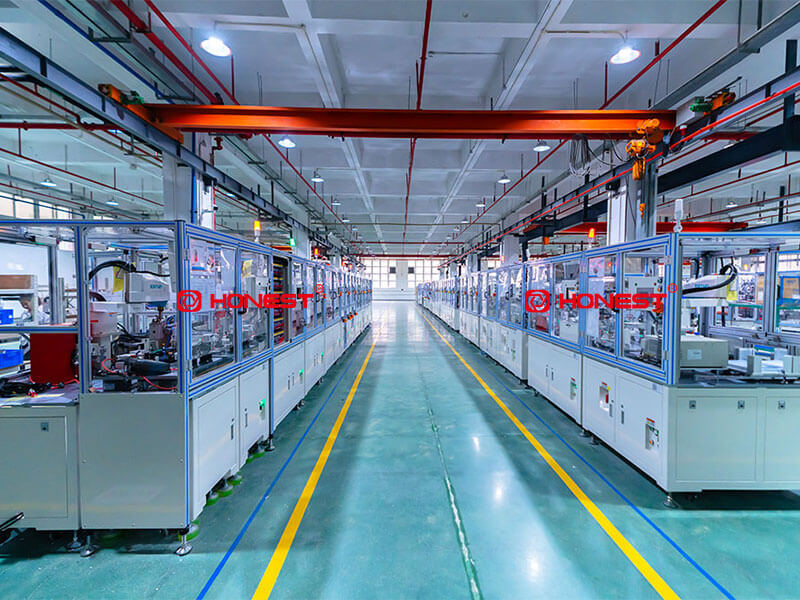
5 Key Factors When Choosing a Motor Winding Machine Manufacturer
If you have limited time, remember these five essential principles when selecting a winding machine manufacturer:
· Define Your Product Requirements Before Choosing the Machine
Do not focus only on machine specifications or configurations. First, clearly define your product process requirements, production targets, and expected yield rate.
· Leave a Safety Margin for Machine Precision
The machine’s rated precision should be at least 20%–30% higher than your actual production requirement to compensate for long-term mechanical wear and accuracy loss.
· Always Conduct Real Sample Testing
Use your own wire materials, bobbins, stators, or product samples for on-site trial winding tests. Actual testing is the best way to verify winding quality, cycle time, and production stability.
· Include After-Sales Support in the Contract
Response time, on-site service schedules, spare parts pricing, and warranty terms should never rely on verbal promises alone. Make sure all service commitments are clearly written into the contract.
· Calculate the 3-Year Total Cost of Ownership (TCO)
Do not evaluate suppliers based only on purchase price. Consider maintenance costs, downtime losses, rework rates, and labor expenses to understand the true long-term operating cost of the equipment.
1. Understand Your Own Requirements First — Winding Machine Selection Checklist
Before contacting any winding machine manufacturer, it is important to clearly define your internal production requirements. In many cases, equipment selection fails not because the machine is poor, but because the requirements were not clearly identified at the beginning of the project.
We recommend evaluating your needs based on the following four key areas. You can also use this section as a practical pre-purchase checklist for winding machine selection.
1.1 Product Type and Winding Process
· Motor Type
Are you producing BLDC motors, brushed motors, stepper motors, servo motors, or EV drive motors? Different motor types require different winding structures and automation solutions.
· Wire Diameter Range
What enamel wire range do you use (for example, 0.1mm–1.0mm)? This directly affects the selection of the tension control system and overall winding stability.
· Winding Method
Are you using concentrated winding, distributed winding, multi-layer winding, or needle winding processes? Different winding methods require different machine structures and control capabilities.
1.2 Precision and Yield Targets
· Industry Precision Requirements
Different industries require different winding accuracy levels. For example, EV drive motors and medical coils often require wire arrangement precision of ±0.01mm, while household appliance motors may only require ±0.02mm.
· Yield Rate Goals
What is your current production yield rate, and what level do you expect to achieve? For example, improving from 90% to 98%. Defining this target helps evaluate the real value of equipment upgrades.
1.3 Production Capacity and Cycle Time
· Production Output Requirements
What are your target daily or monthly production volumes? This determines whether you need a single-station, multi-station, or fully automated production solution.
· Cycle Time Requirements
What is the required winding time per product (seconds per piece)? Does your production line require stable 24/7 operation?
1.4 Flexibility and Changeover Requirements
· Production Model
Is your production focused on high-volume standardized products or high-mix low-volume manufacturing? This will influence the machine’s automation level and flexibility requirements.
· Changeover Frequency
How often do you need to change wire types, bobbins, or product models? Is your target changeover time a few minutes or several tens of minutes?
2. Five Key Dimensions for Evaluating Winding Machine Manufacturers
After clearly defining your own requirements, the next step is to systematically evaluate the real capabilities of winding machine manufacturers. Do not rely solely on brochures or sales presentations. Instead, assess suppliers through the following five core dimensions.
2.1 Technical Capability and Winding Precision
Why it matters:
Winding precision directly affects the electrical performance of the motor, including resistance consistency and inductance stability, as well as rotor dynamic balance. Insufficient precision can lead to higher noise, abnormal heat generation, and reduced motor lifespan.
How to evaluate:
· Focus on measurable data, not vague claims
Request specific parameters such as positioning accuracy, wire placement accuracy, and repeat positioning accuracy (e.g., ±0.01mm). Avoid unclear terms like “high precision” or “advanced technology.”
· Check key mechanical components
Evaluate the brands and specifications of core components such as servo systems, ball screws, and linear guides. For example, whether C3-grade precision ball screws are used.
· Request inspection and verification reports
Ask for factory inspection reports (e.g., laser interferometer testing data) or third-party accuracy certification documents to ensure the stated performance is reliable.
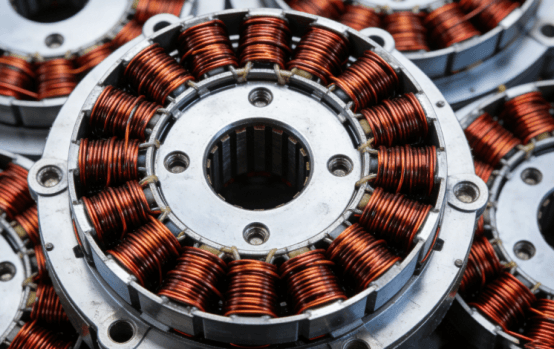
2.2 Equipment Performance and Operational Stability
Why it matters:
Machine stability directly determines production continuity. Frequent downtime not only reduces output but also generates significant scrap from semi-finished products.
How to evaluate:
· High-speed operational stability
At maximum speed, is the tension stable? Does the flyer or spindle show abnormal vibration during high-speed operation?
· Reliability metrics (MTBF)
Check the Mean Time Between Failures (MTBF) and the service life of key wear parts such as tensioners and guide wheels.
· Functional completeness and error-proof design
Does the machine include wire break detection, no-wire alarms, automatic slot crossing, and automatic defect rejection systems to reduce human error?
2.3 Flexibility and Customization Capability
Why it matters:
As product iterations accelerate, machines without flexibility quickly become sunk costs.
How to evaluate:
· Changeover method and efficiency
Can changeovers be completed via one-click program switching, or do they require extensive mechanical adjustments and fixture replacement? Faster changeover means higher production flexibility.
· Customization experience
Can the manufacturer provide tailored solutions for special processes, such as high-frequency reactor coils, fast-charging inductors, or non-standard motor structures?
· Wire range and tension adaptability
Does the tension control system support both current and future wire diameter requirements, ensuring long-term scalability?
2.4 Quality Certifications and Industry References
Why it matters:
Certifications are the entry ticket to high-end supply chains, while real-world cases significantly reduce project risk.
How to evaluate:
· Core certifications
Does the manufacturer hold ISO9001 quality management certification? For automotive applications, is IATF16949 certification available?
· Industry benchmark cases
Look for mass production references in demanding industries such as EV, medical devices, or high-end industrial applications—not just prototype demonstrations.
· Actual yield performance
Request real production yield data from similar equipment running at customer sites, such as stable performance above 98%, rather than laboratory results.
2.5 After-Sales Service and Long-Term Support
Why it matters:
Winding machines are precision automation systems. Even one hour of downtime can result in significant production losses.
How to evaluate:
· Response time and support system
Can the supplier respond within 2 hours remotely and provide on-site support within 24–48 hours? Do they offer remote diagnostics systems?
· Training and technical support
Do they provide comprehensive on-site training, operation guidance, maintenance manuals, and video materials to ensure in-house maintenance capability?
· Spare parts availability
Are critical spare parts kept in stock for long-term supply? Is continuous availability of core control systems guaranteed throughout the machine lifecycle?
3. Key Parameter Comparison Table
We recommend using the table below as a structured checklist when requesting technical documentation from manufacturers. You can also fill in your own production requirements and use it for side-by-side supplier comparison.
Dimension | Key Parameters | What to Focus On | Your Requirements |
Winding Precision | Positioning accuracy / wire placement accuracy / tension control accuracy | Whether specific values are clearly stated (e.g., ±0.0X mm) and whether laser interferometer inspection reports are available |
|
Speed & Capacity | Spindle speed / multi-axis configuration / cycle time per piece | Tension fluctuation at maximum speed and whether 24/7 continuous operation is supported |
|
Tension & Wire Diameter | Tension control method / applicable wire diameter range | Electronic closed-loop tension vs mechanical tension system; whether tensioners need replacement when changing wire types |
|
Control System | PLC / motion control brand / program storage / communication interfaces | Whether MES/ERP integration is supported and whether data traceability is available |
|
Mechanical Structure | Machine frame material / ball screw & linear guide / protection rating | Rigidity and vibration resistance; precision grade of screw/guide; IP protection level |
|
Quality Certification | ISO / IATF16949 / industry cases / yield rate | Mass production references in automotive or medical industries and actual yield data |
|
After-sales Support | Response time / on-site service time / training & spare parts | Whether SLA terms are written into contract and spare parts pricing transparency |
|
4. Common Pitfalls to Avoid in Winding Machine Selection
Before making your final purchasing decision, carefully review the following five common pitfalls. These issues are often the main reasons behind project failure, unstable production, or unexpected cost overruns.
4.1. Focusing Only on Purchase Price Instead of Total Cost of Ownership (TCO)
Low-cost machines often compromise on critical components such as ball screws, tension systems, or motion control parts. While the initial investment may seem attractive, long-term maintenance costs, downtime losses, and reduced productivity can be significant.
Always evaluate suppliers based on 3-year or longer Total Cost of Ownership (TCO) instead of just the purchase price.
4.2. Trusting “High Precision” Claims Without Verification
Many suppliers advertise precision values based on ideal laboratory conditions, which do not reflect real production environments.
Always request on-site testing data or inspection reports, and validate performance using real production samples during trial runs.
4.3. Ignoring Customization and Future Flexibility
Focusing only on current product requirements without considering future product upgrades or design changes can quickly make the equipment obsolete.
Lack of flexibility may force you to reinvest in new machines when product specifications change.
4.4. Relying on Verbal After-Sales Promises
During the sales process, suppliers may promise fast response and strong support, but these commitments are often not included in the contract.
All key after-sales terms—such as response time, on-site service cycle, and spare parts pricing—must be clearly written into the contract.
4.5. Skipping On-Site Factory Audit and Trial Testing
Videos can be edited, but real production cannot be faked.
You must conduct on-site testing with your own wire, bobbins, or stator samples, and also evaluate:
Actual winding quality and machine stability
Manufacturer’s production capability and factory scale
Operating condition of existing machines and customer cases
Engineering team’s ability to handle complex processes
5. FAQ – Frequently Asked Questions
Q1: What level of winding accuracy is generally required for a motor winding machine?
A: It depends on the application. For household appliance motors, a wire positioning accuracy of around ±0.02 mm is typically sufficient.
For high-performance applications such as EV drive motors, servo motors, and precision medical coils, it is recommended to choose machines with an accuracy of ±0.01 mm or better.
As a general rule, the machine’s precision should exceed the product requirement by 20–30% to compensate for long-term mechanical wear and ensure stable production quality.
Q2: How can I evaluate the technical capability of a winding machine manufacturer?
A: There are three key aspects to assess:
Core components – Check whether the machine uses top-tier servo systems and high-precision ball screws from reputable brands.
Control algorithms – Evaluate whether the tension control is fully electronic closed-loop and whether the winding & layering algorithms are independently developed.
Industry validation – Look for proven mass-production experience with leading customers in relevant industries.
Q3: Do I have to choose imported brands when buying a winding machine?
A: Not necessarily.
In the past, imported brands had an advantage in speed and precision. However, leading domestic manufacturers have significantly improved in recent years, especially in the EV motor winding sector, achieving comparable or even superior performance in many applications.
At the same time, local manufacturers often provide better customization flexibility, cost efficiency, and faster after-sales response.
For most standard and non-extreme applications, high-quality domestic equipment is already a more practical choice.
However, for industries such as automotive, robotics, or medical devices with extremely high precision requirements and sufficient budget, imported solutions can still be considered.
Q4: What should I focus on during on-site machine testing?
A: Focus on three “real-world” validations:
Real workpieces – Test using your actual wire diameter and stator/core design.
Real operating speed – Run the machine at its claimed maximum speed and observe tension stability, winding alignment, and whether wire breakage occurs.
Real yield performance – Run continuous production of 50–100 pieces and evaluate the actual qualified yield rate.
Q5: How should after-sales service be defined to avoid unreliable support?
A: To avoid unclear commitments, make sure all service terms are clearly written into the contract:
Define response time clearly (e.g., phone response within 2 hours, on-site support within 10 hours/days)
Specify warranty scope and post-warranty pricing for common wear parts (such as tensioners, guide wheels, servo drives, etc.)
Require free basic operation training and maintenance guidance for operators
Clarify remote support availability (online troubleshooting, video support, etc.)
A clearly defined service agreement is the most effective way to ensure long-term stable support.
6. 4-Step Decision-Making Process
To avoid getting lost in the selection process, we recommend following this structured 4-step decision-making framework:
Step 1: Define Your Requirements
Start by clearly defining your needs using a structured requirement checklist.
Identify key parameters such as product design, winding process, precision level, and production capacity targets.
A clear requirement baseline will significantly improve the efficiency of supplier evaluation and technical communication.
Step 2: Multi-Dimensional Supplier Screening
Based on the five key evaluation criteria, shortlist 3–5 potential manufacturers.
Request detailed technical proposals from each supplier, including machine configuration, control system architecture, and automation capabilities.
This step helps you compare not only price, but also technical depth and engineering capability.
Step 3: On-Site Trial & Validation
Bring your actual wire materials and stator/rotor samples to the manufacturer’s facility for real machine testing.
Evaluate performance under real production conditions, focusing on:
Actual cycle time
Winding stability
Tension consistency
Yield rate and defect control
This is the most critical step to verify real manufacturing capability.
Step 4: Evaluate Total Cost of Ownership (TCO)
Compare suppliers based on a 3-year total cost of ownership model, including:
Select the solution that delivers the best long-term value, not just the lowest upfront price.
Choosing a motor winding machine manufacturer is not just a procurement decision—it is a long-term partnership with your production line.
We hope this guide helps you avoid common selection pitfalls and build a high-yield, high-efficiency motor automation production system.
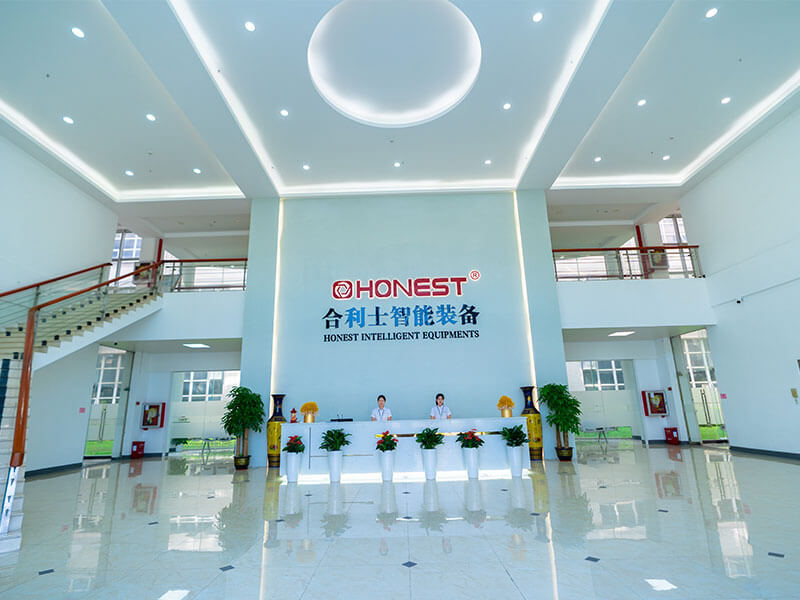
Among the equipment suppliers that meet the above strict evaluation standards, HONEST Automation stands out as a representative manufacturer in the motor automation equipment industry.
Founded in 2007, the company focuses on the R&D and manufacturing of winding machines and automation solutions for applications including automotive brushed and brushless motors, humanoid robotics, medical devices, and power tools.
To date, HONEST Automation has obtained multiple internationally recognized certifications, including IATF 16949, ISO 9001, ISO 50001, ISO 45001, and ISO 14001. The company also holds more than 1,000 proprietary intellectual property rights, covering core technologies such as fully automatic winding machines, hairpin motor production equipment, spot welding machines, and advanced motion control software systems.
With extensive mass-production validation in high-demand sectors such as new energy vehicle drive motors, automotive brushed/brushless stators and rotors, and humanoid robotics, HONEST Automation has established a strong engineering and application track record in precision motor manufacturing.