A stator winding machine is automated motor manufacturing equipment used to wind copper wire into a stator according to a defined winding pattern. It controls wire feeding, tension, winding position, and turns to improve production consistency and efficiency. The appropriate winding method depends on the stator structure, wire specification, motor design, and production requirements.
What Is a Stator Winding Machine?
A stator winding machine is a type of motor manufacturing equipment designed to place copper wire into or around the stator of an electric motor. The winding process creates the electromagnetic coils required for the motor to generate a magnetic field and produce rotation.
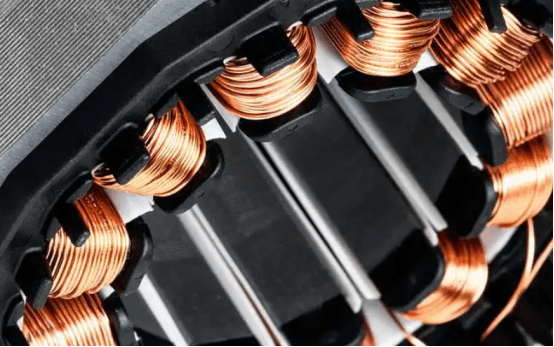
In small-scale or prototype production, stator winding may still be performed manually or with semi-automatic equipment. However, as production volume increases, manufacturers normally need better control over wire tension, winding position, number of turns, and production cycle time. This is where automatic stator winding equipment becomes valuable.
A winding machine does more than simply rotate the stator. The machine must coordinate the movement of the winding head, wire feeding system, tooling, and stator so that the wire follows the required winding pattern accurately.
For different motor designs, the winding method and machine configuration can be significantly different. Therefore, a stator winding machine should be selected according to the motor rather than treated as a universal piece of equipment.
How Does a Stator Winding Machine Work?
The basic working process begins with copper wire being supplied to the winding system. The wire passes through a controlled feeding and tension mechanism before reaching the winding head.
During winding, the machine controls the movement of the wire and the stator or tooling. Depending on the winding technology, the wire may be inserted directly into stator slots or formed into coils before being transferred to the stator.
Wire tension is particularly important. If tension is too high, the enamel coating may be damaged or the wire may experience excessive stress. If tension is too low, the winding may become loose or irregular.
The machine also controls parameters such as winding speed, number of turns, wire positioning, and winding sequence. These parameters can normally be programmed according to different motor models.
For automated production lines, the winding process can be connected with automatic loading, unloading, inspection, testing, and downstream assembly processes. This allows winding to become part of a continuous motor manufacturing process rather than an isolated operation.
What Are the Main Types of Stator Winding Machines?
Different stator structures require different winding technologies.
Needle winding machines use a needle or winding nozzle to guide the wire into the stator slots. This method is commonly used for smaller stators and applications where precise wire placement is important.
Flyer winding machines use a rotating flyer to wind the wire around the stator or tooling. They can be suitable for particular stator structures and production requirements where high-speed winding is required.
Stator coil winding machine form coils according to predefined dimensions and winding patterns. The coils can then be inserted into the stator as part of a larger manufacturing process.
There are also customized winding systems developed for specific automotive motors, BLDC motors, industrial motors, and other applications. The best machine configuration depends on the actual product geometry rather than simply the machine type.
What Factors Affect Stator Winding Quality?
Winding quality is affected by several factors working together.
Wire diameter is one of the most obvious considerations. Thin wire requires more careful tension control, while larger wire may require different tooling and feeding parameters.
The number of turns and winding pattern also affect the final coil geometry. Even a small deviation can influence the electrical characteristics or create interference during later assembly.
Stator slot dimensions, insulation structure, coil height, and wire positioning must also be considered. For automated production, tooling accuracy becomes especially important because the machine needs to repeat the same process thousands of times.
This is why simply comparing machine speed is not enough when evaluating winding equipment. A machine that runs quickly but produces unstable winding quality may create more problems downstream.
When Is Automatic Winding More Suitable?
Automatic winding becomes increasingly useful when production volume and quality requirements increase.
For prototypes and very small batches, manual or semi-automatic winding can provide flexibility. However, once a motor design becomes stable and production quantities increase, operator-dependent processes may create differences in winding quality and cycle time.
Automatic equipment can reduce repetitive manual operations and maintain defined process parameters. It can also provide more predictable production capacity and make it easier to connect winding with inspection and assembly.
The decision should therefore be based on production requirements rather than automation for its own sake. A highly automated machine is not automatically the right solution for every manufacturer.
How Should Manufacturers Select a Motor Stator Winding Machine?
The selection process should start with the motor itself.
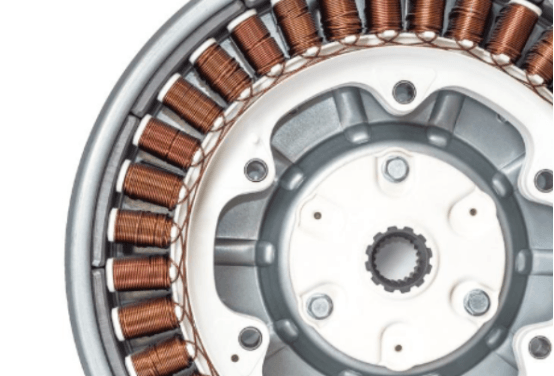
Manufacturers should provide information such as stator dimensions, slot number, wire diameter, number of turns, winding pattern, required production capacity, and target cycle time. The manufacturer can then determine the appropriate winding technology and machine configuration.
It is also important to consider future production. If several motor models are expected to share similar structures, flexible tooling and changeover functions may provide greater long-term value.
For high-volume automotive motor production, equipment stability, cycle time, quality control, and integration capability may be more important than achieving the highest possible winding speed.
FAQ
1. Can one stator winding machine produce different motor models?
It depends on the machine design and product similarity. If different stators have compatible structures and winding requirements, tooling and process changes may allow multiple models to be produced.
2. Is automatic winding always better than manual winding?
Not necessarily. Manual or semi-automatic processes can be practical for prototypes and low-volume production. Automatic winding becomes more valuable when volume, consistency, labor requirements, and process stability become more demanding.
3. What is the most important specification when choosing a winding machine?
There is no single specification that applies to every application. Motor structure, winding method, wire specification, production capacity, cycle time, and required automation level should be evaluated together.
A stator winding machine is not simply a machine for rotating wire around a stator. It is a precision manufacturing system that must control wire feeding, tension, positioning, winding parameters, and production repeatability.
For this reason, the right solution should be designed around the motor and production process. HONEST Automation develops customized stator winding equipment for different motor applications, helping manufacturers move from manual or semi-automatic operations toward more stable and scalable production.